Di Alessia D’Introno
In a thoughtful and thoughtful reflection on contemporary art and its postcolonial paradigms, Elvira Vannini, art critic and historian, promotes an art that is entirely feminist, ecological, and anti-imperialist. Through her magazine, Hot Potatoes, she formulates a new critique.
In your case, the terms feminism and decolonialism don’t imply a passing fad, but the state of your work. What are the goals of your writing in Hot Potatoes? How did the project come about?
The project stems from the idea of reclaiming a space for contemporary aesthetic-political criticism, reactivating radical and non-hegemonic counter-historiographical memories. The feminist perspective has become the lens through which to observe and interrogate the boundary between the visible and the repressed, including questions about the art system, its productive segments, and its ideological-cultural structures. I am trained as an art historian, and the paradigm from which I emerge is hierarchical, bourgeois, Eurocentric, and patriarchal. A paradigm that has excluded all those political, social, and feminist excesses that have nourished cultural production but disturbed the modernist “fairytale” of neutrality, impartiality, and autonomy. As Nelly Richard states in the extraordinary text we were among the first to publish, feminist criticism is already cultural criticism. It aims to deconstruct the concatenation of signs, words, gestures, and images of the (patriarchal) ideological-discursive structures through which culture produces knowledge, in order to challenge them. Hot Potatoes aims to propose untamed perspectives, along with an examination of art as the cutting edge of neoliberalism and the rhetoric that legitimized it: to challenge dominant powers, it’s necessary to develop a counter-hegemonic vision in terms of language, imagery, and imagination. Being independent therefore provides a certain margin of freedom, but it’s from feminist criticism that we’ve learned how to “stay on the stomach of patriarchy.”
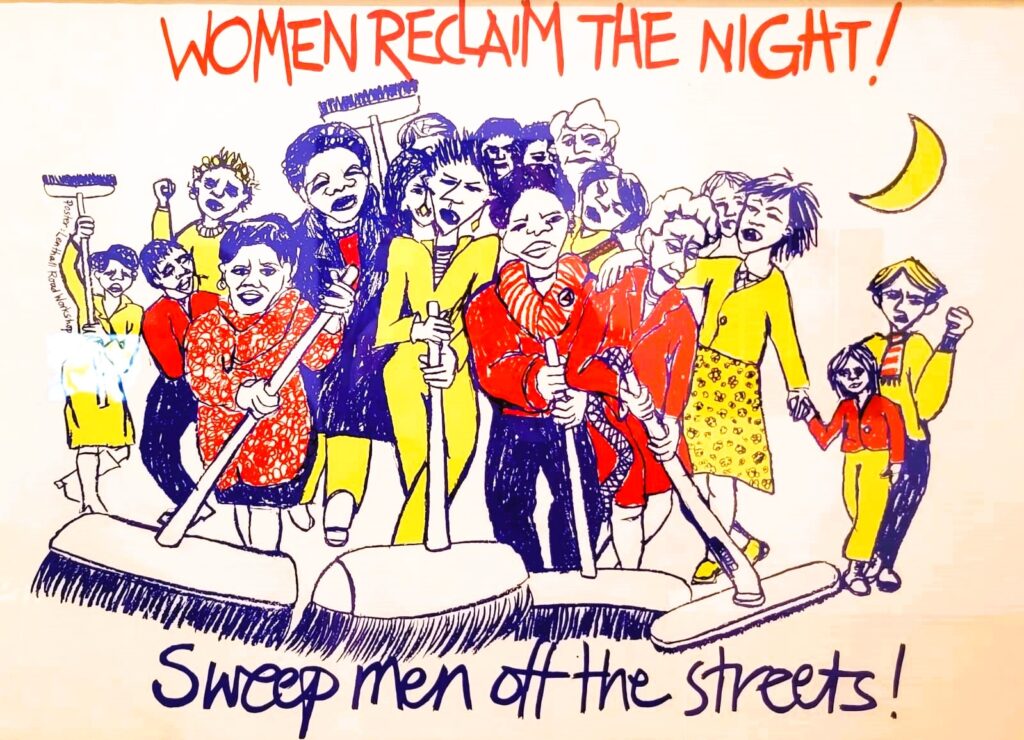
Lenthall Road Workshop, Sweep Men off the Street, 1980. Fotografie di Elvira Vannini
Quali sono le metodologie de-coloniali più presenti oggi nel sistema museale?
There have been artists who have challenged institutions from within. But what does decolonizing the exhibition space mean? Art is a cultural and aesthetic category that continues to be defined as white, male, Western, and bourgeois, despite the numerous processes of inclusion, integration, and institutional repair we have subjected it to. Exhibitions remain exhibitions and do not change social hierarchies. Cultural policies centered on the rhetoric of difference and multiculturalism have not weakened systemic racism, except through aesthetic and cosmetic operations. Museums remain normative places that correspond to a still-colonial taxonomy; there has been no revolution—only artwashing—and I don’t even know how this can be compatible with the very organization of the museum. A fundamental task is the political work on archives, attempting to rehabilitate and rewrite those histories that have been removed, buried, erased, or otherwise obscured within the dominant historiographical framework. Decolonizing knowledge structures means deconstructing not only museums and exhibition spaces, but also culture and universities. I like to think about the possibilities for “hacking the academy.” Working in decoloniality means questioning, dismantling, and destroying the old paradigms through which reality has been interpreted.
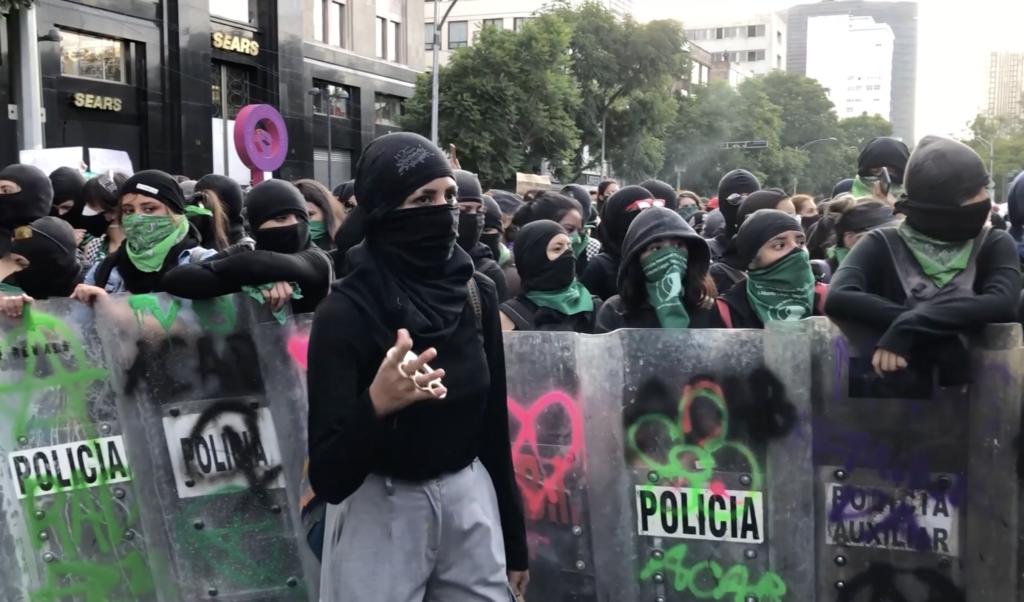
Dora García, Si Pudiera Desear Algo (If I Could Wish for Something), video, 2021. Courtesy the artist. Fotografie di Elvira Vannini
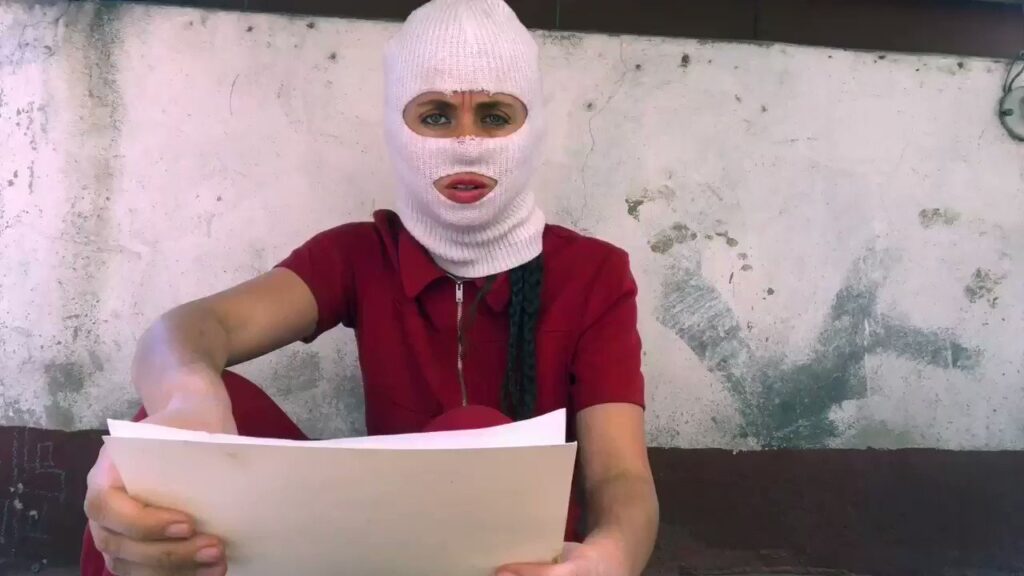
LASTESIS x Pussy Riot, MANIFESTO AGAINST POLICE VIOLENCE, 2020. Fotografie di Elvira Vannini
Sull’Italia. Cosa accade nel sistema artistico italiano?
If, as Audre Lorde said, “You cannot destroy the master’s house with the master’s tools,” neither can we accept the existing one or rebuild it in the same way, with the same conventions and cultural formats of modernity that we have inherited and never radically questioned. Certainly, in the Italian context, the most problematic issue is the almost total lack of space for criticism, as well as the absence of a counterpart. There is no antagonism, no dissident voice in art journalism with respect to the structures of power. It is difficult to read articles that denounce or highlight all the questionable, often hidden, aspects of the structures of exhibition making or the management of cultural and museum policies. If we consider that the strongest and most politically focused attack on recent political events—from former Minister of Culture Gennaro San Giuliano and his successor Alessandro Giuli, to the controversial and embarrassing exhibition on Futurism—has come from the investigative journalism of a television program like Report, rather than from art magazines, it speaks volumes. Aside from a few dissenting voices, unafraid of political confrontation, like Tomaso Montanari, for whom “calling them fascists is an intellectual duty,” where is critical thinking in the rest of the arts sector?
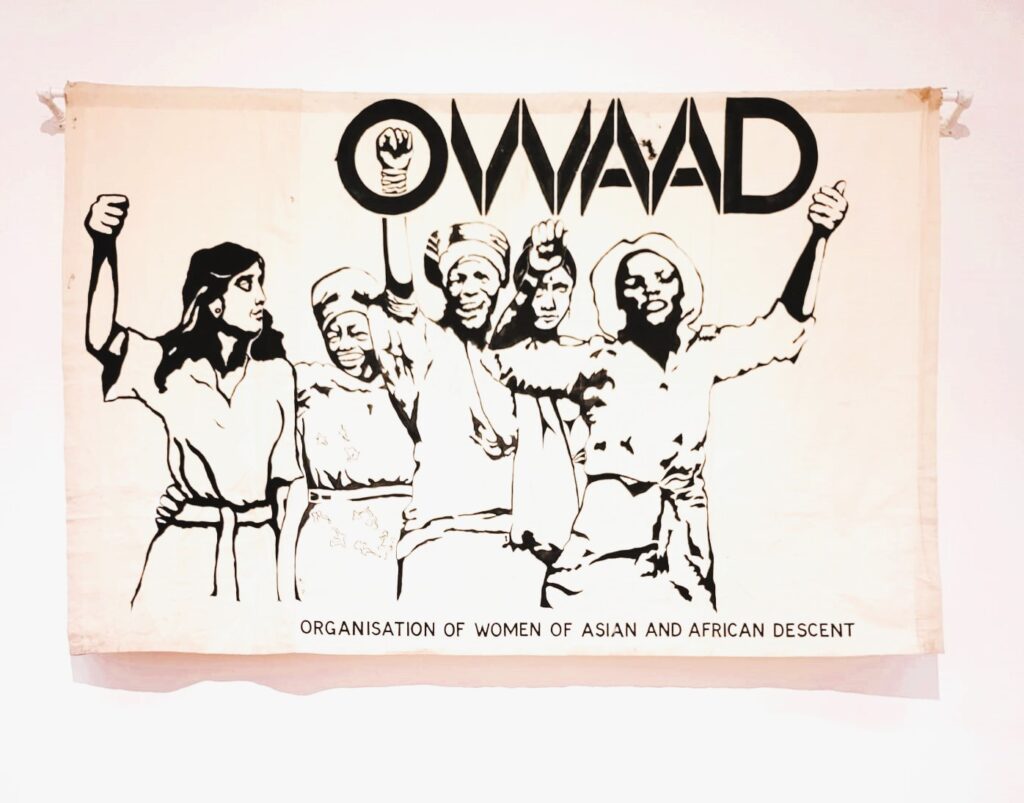
Banner di OWAAD – Organization of Women African and Asian Descent, dipinto da Stella Dadzie, 1978. Fotografie di Elvira Vannini
Museo delle civiltà di Roma e Mudec Milano. Ci sono stati miglioramenti o peggioramenti?
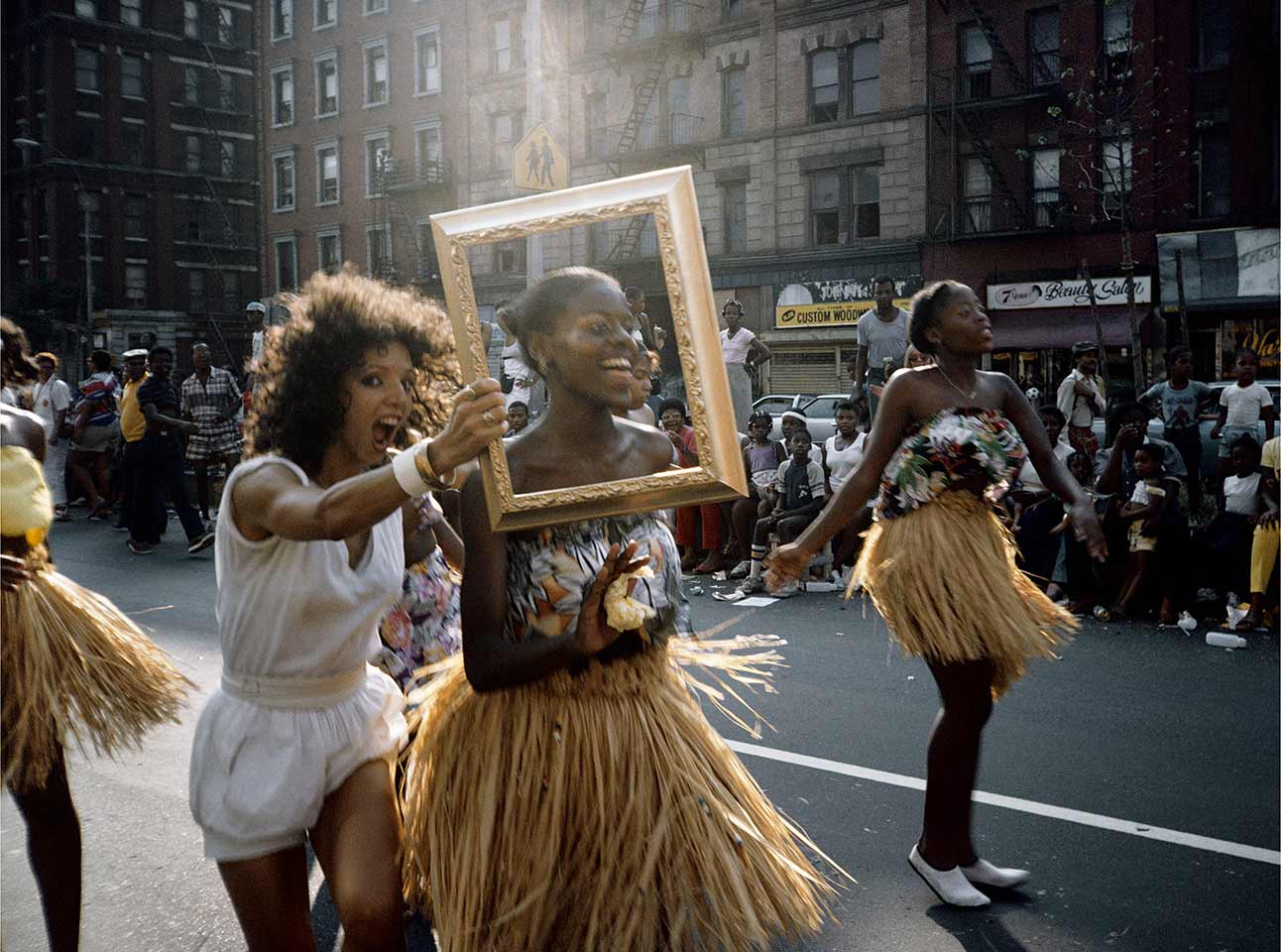
I haven’t yet visited Rome’s Museum of Civilizations, although I’ve closely followed the events and the exhibitions they’ve re-staged featuring part of the collection. The approach promises to be decolonial, but it’s colonized by the economic subservience of the powerful forces of the art system, which has now been reduced to the circuit of commercial galleries and responds only to its neoliberal and capitalist governance. To establish a decolonial discourse, we must resist the reproduction of colonial taxonomies and not simply make an inclusive move, but reject the assumptions on which modernity’s exhibition culture was constructed. This applies to the Mudec as well as ethnographic museums. I’m thinking of a famous performance by the African-American artist Lorraine O’Grady, who passed away a few days ago. During the annual African-American Day Parade in Harlem, she organized a performance, ” Art is …,” in which a golden float with an enormous frame frames the street while about twenty racialized performers march, dance, and frame the Black audience participating in the parade. As Françoise Vergès wrote in her forthcoming book The Museum as Battlefield (Geoarchivi, Meltemi, 2025): The model is black, the frame is white. The problem is that we still can’t think of art outside of that neocolonial and modernist frame, from that institutional context, within the heart of the white colonial empire, which are our museums and exhibition systems.
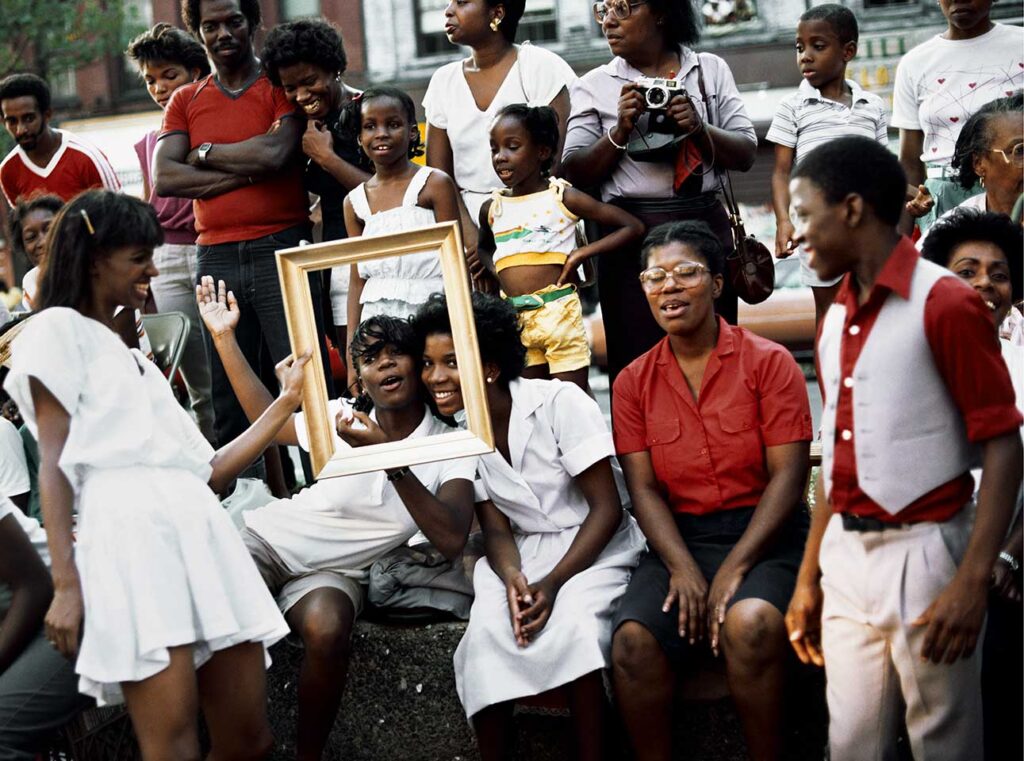
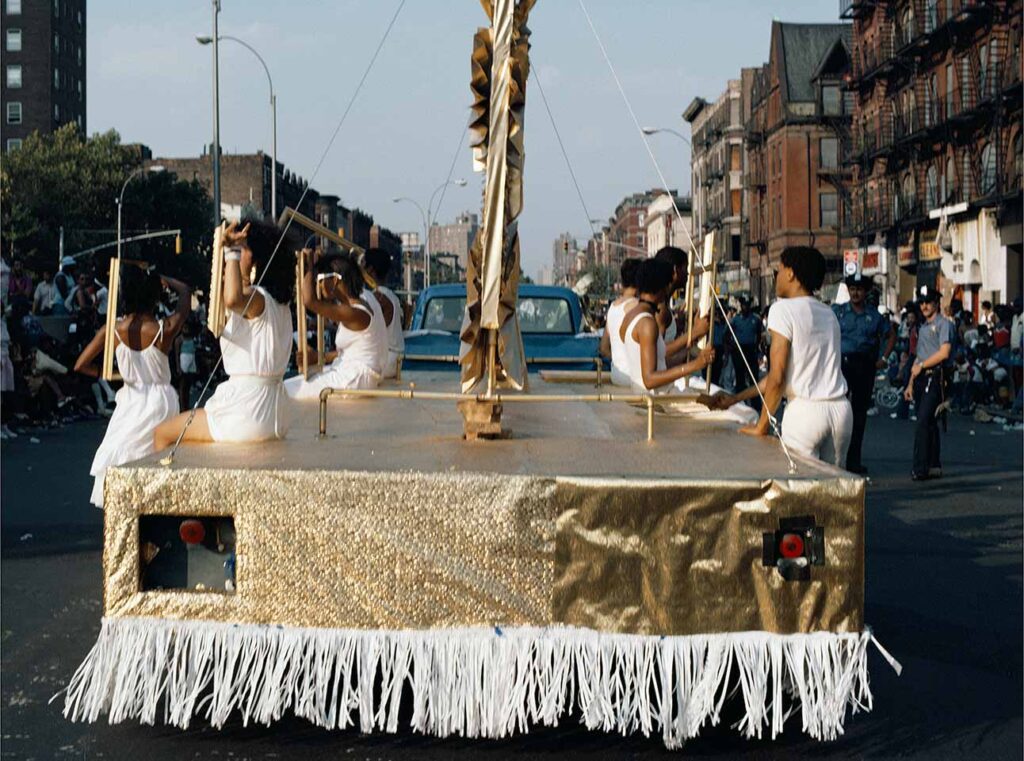
Lorraine O’Grady, Art is…, performance, 1983-2009. Fotografia di Elvira Vannini
Come si sente di concludere questa intervista?
We are steeped in colonial modernity and all its wickedness, like the gherkins in the pickled jar Rachele Borghi talks about, an apt metaphor with which I’d like to conclude this interview. The gherkins are immersed in a strong-tasting brine. The water is infused with a combination of modernity’s ingredients: violence, racism, imperialism, capitalism, and colonialism. Simply removing a gherkin and rinsing it doesn’t remove that flavor, as it is deeply imbued with it. It’s as if the paradigm of postcolonialism has allowed us to see the world from a different, non-Eurocentric perspective, reversing our gaze (but not our sovereignty), forgetting that the world doesn’t change so easily. Decoloniality, Borghi argues, doesn’t aim to replace one paradigm with another, one discipline with another, but to destroy paradigms. Or to put it in the words of Alpha Oumar Konaré, former president of Mali and of ICOM (International Council of Museums), in 1992, when asked, “How can we heal the colonial wound?”, he replied, “We must destroy the museum.” The museum is an expression of that type of culture, ours. Therefore, we cannot hope to heal this wound simply by repatriating works from collections, or by trapping ourselves in the trap of inclusion and the rhetoric of multiculturalism. In my opinion, we must emancipate the function of institutions, research, and criticism. We must intervene in the rewriting of history, break the centrality of heteronormative and racist narratives, conduct political work on archives, and direct critique against power, to give voice to those disobedient, queer, non-normative, racialized bodies that do not exist in official documents, because silence breeds invisibility.
Elvira Vannini è storica dell’arte e critica. Dottore di ricerca in Storia dell’Arte Contemporanea presso l’Università degli Studi di Bologna, diplomata alla Scuola di Specializzazione in Storia dell’Arte. Ha tenuto seminari e lezioni in numerose Istituzioni, Università e Accademie, tra cui IULM, 2011-12, Master Studi e Politiche di Genere, RomaTre, 2020. Dal 2010 è docente in NABA, Nuova Accademia di Belle Arti di Milano. Ha pubblicato saggi e articoli sia in riviste di settore che in piattaforme legate a realtà di movimento tra cui: Machina (DeriveApprodi), OperaViva Magazine, Alfabeta2, Commonware. È stata co-conduttrice di uno spazio radiofonico su Radio Città del Capo – Popolare Network. Nel 2017 ha fondato il blog/magazine Hot Potatoes dedicato ai rapporti tra arte, genere e politica attraverso, da una prospettiva femminista. Attualmente cura la sezione Dirty cube per la rivista Machina. Ha pubblicato l’antologia Femminismi contro. Pratiche artistiche e cartografie di genere, per la collana Geoarchivi di Meltemi, 2023.

Alessia D’Introno is Editor-in-Chief of the African contemporary art magazine Equator Echoes, registered in the Special List of the Lombardy Journalists’ Association. She holds a Master’s degree in Visual Arts and Curatorial Studies from NABA, Milan, and has completed a postgraduate course in Demoethnoanthropological Heritage at the University of Milano-Bicocca. She has published articles in Juliet Art Magazine and ArtsLife. Her critical and curatorial research focuses on the deconstruction of classical art history and the decolonization of the contemporary European art system.
N. 5 Maggio 2026