By Camilla Boemio
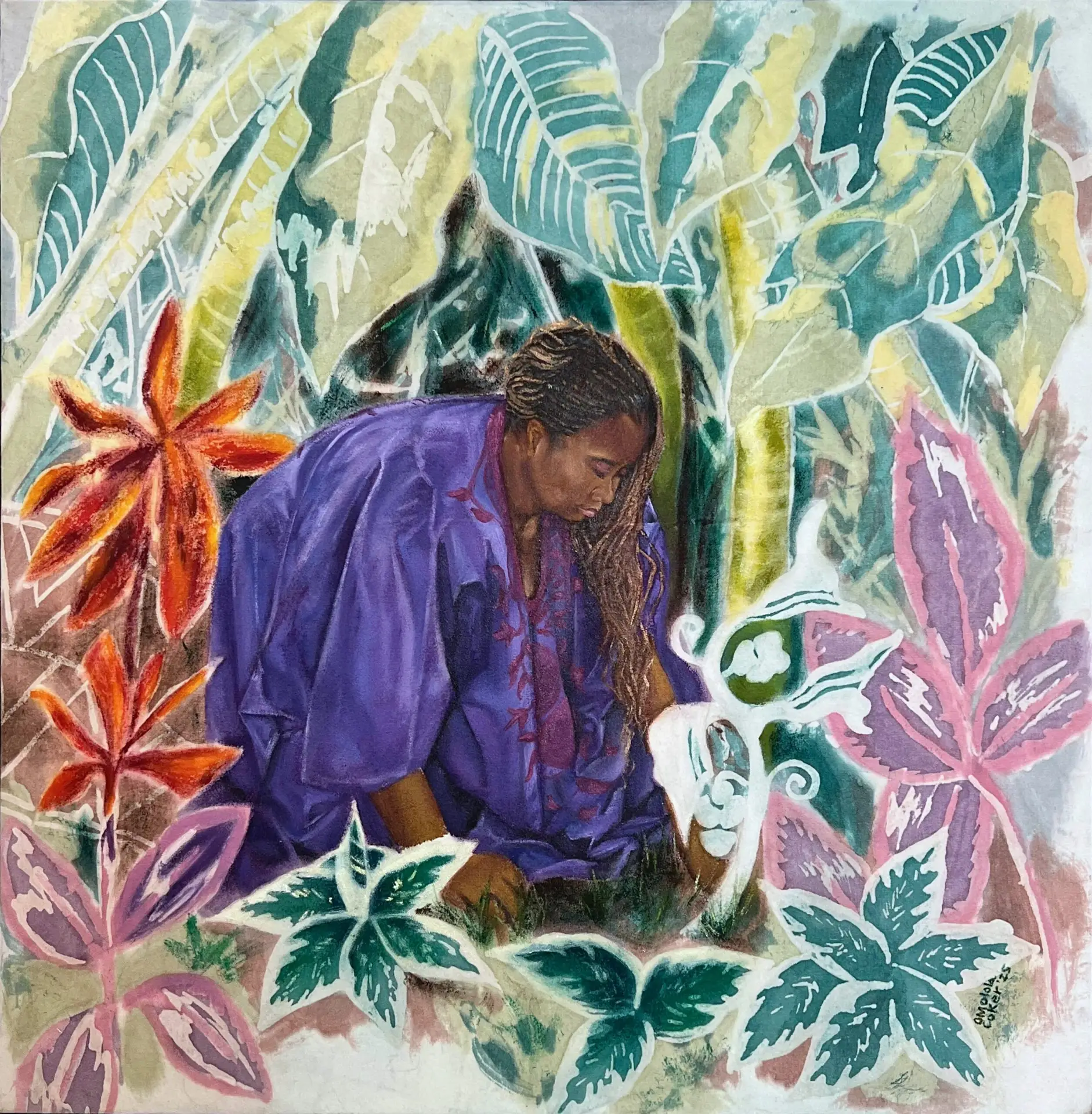
The ‘Stateless Mind Pavilion’, at 16th Gawangju Biennale, brings together artists from Asia, Africa, Europe and South and North America, whose practices engage questions of movement, memory, identity, sound, ecology, technology, and collective knowledge. Rather than representing a nation, the Pavilion proposes another way of imagining international exchange—one grounded in relationships rather than borders.
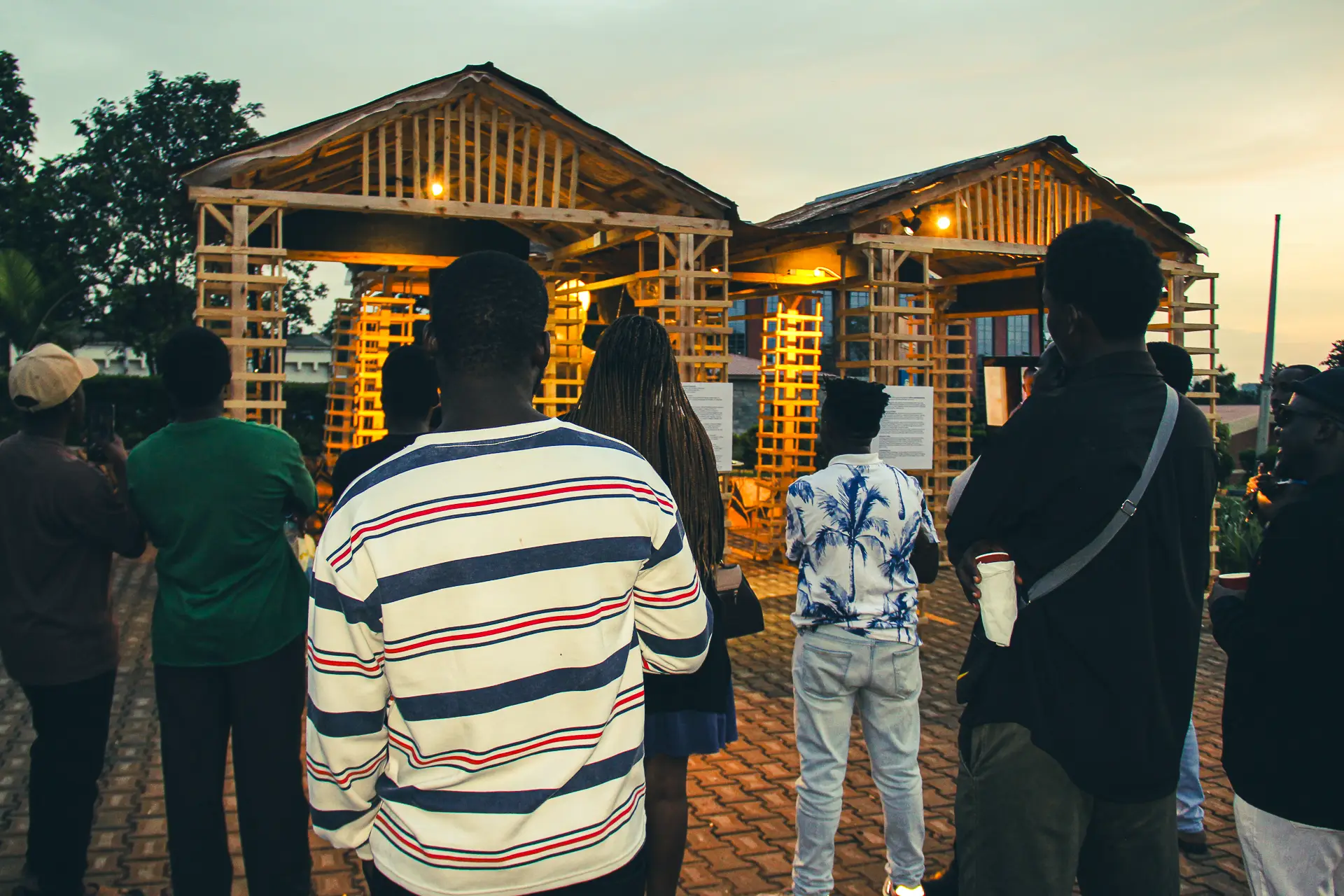
Instead of functioning as a fixed exhibition, the Pavilion unfolds as a constellation of temporary relay points connecting artists, communities, and places. Each relay becomes both a local gathering and part of a wider translocal conversation, where encounters, hospitality, collaboration, and shared experiences take precedence over national representation.
Through installations, moving image, sound, performance, workshops, artist talks, neighbourhood walks, shared meals, radio broadcasts, and informal gatherings, the Pavilion explores how artistic practice can create spaces for dialogue across different histories, cultures, and geographies. Sound functions as one of the connecting threads—not as a prescribed medium, but as an invitation to listen to places, to one another, and to the conditions from which each encounter emerges.
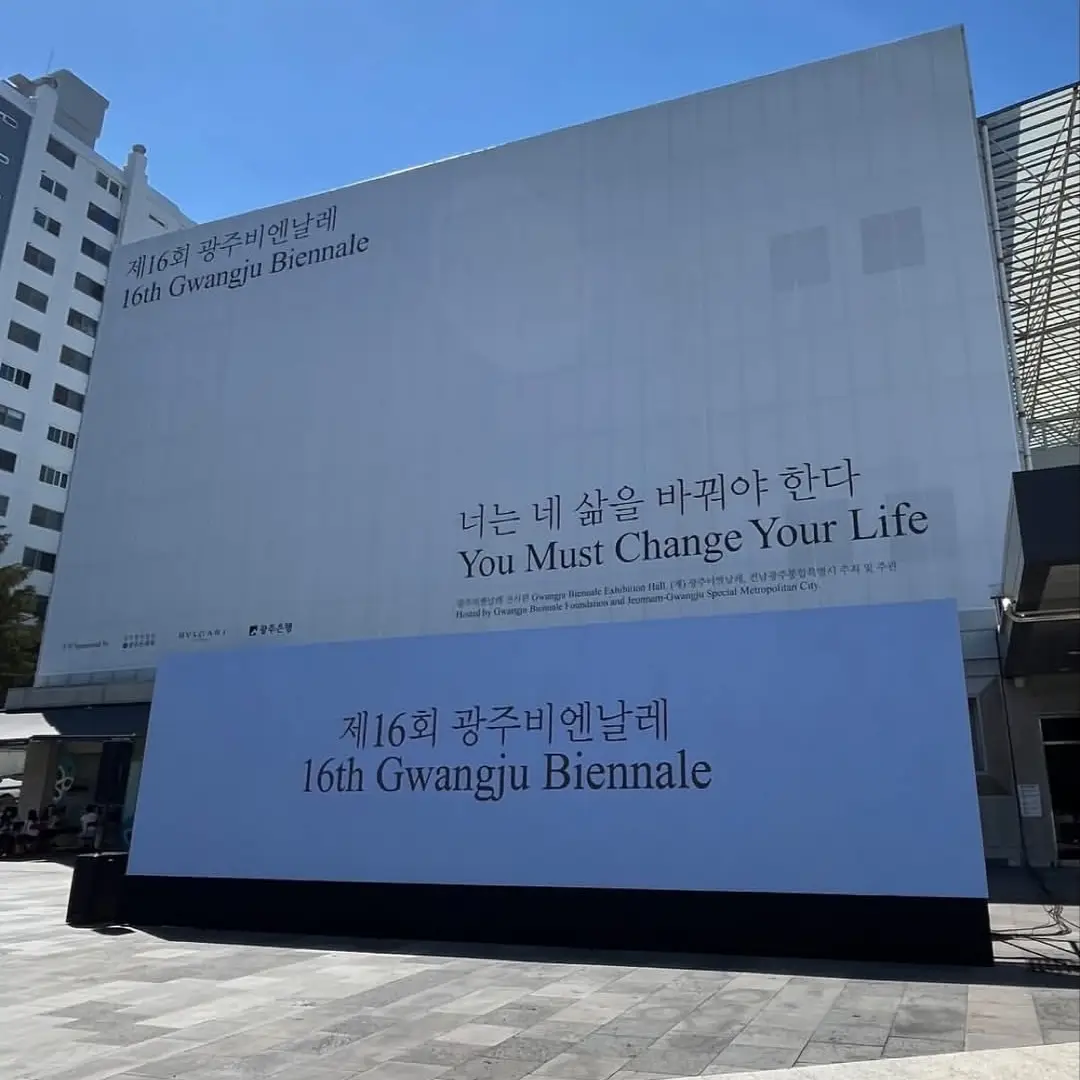
Resonating with the 16th Gwangju Biennale’s theme, ‘You Must Change Your Life’, the ‘Stateless Mind Pavilion’ remains unfinished, adaptive, and shaped by those who participate in it. Rather than presenting a single narrative, it offers an evolving ecology of encounters in which each local gesture contributes to a larger conversation while retaining its own specificity.
The curator speaks to Sheung YIU about the inspiration and research behind his group show, ‘Stateless Mind Pavilion’.
In a past interview you tell that we are living in technological medieval times. Which is your vision of the future and how technology will change human life?
I don’t see the future necessarily being more progressive than the past. Progress is not linear, and history often repeats itself.
History is full of contingency, and there is no guarantee of progress and a better quality of life in the future, though this narrative surely serves people who want us to believe that technological advancement is inevitable. That Luddites are a violent, backwards mob.
I recently read Jonathan Crary’s Scorched Earth, and I think his diagnosis of the Internet and network culture is emblematic of my view on AI-related technologies, including facial recognition. He pointed out that the Internet is not an inherently democratic and revolutionary tool as it is usually thought of. “The only reason that the internet seemed “freer” or more open initially was because the projects of financializing and expropriation did not occur all at once and took a number of years to reach an acceleration point in the early 2000s.
I reminisce about the early 2010s when tech startups marketed their product as a revolutionary solution (remember Uber was marketed as shared economy, how your cars spend more than 90% of the time idle in the car park, and what kind of good it can do when we free up the resources for social good? And now it’s just a more exploitative and inhumane version of the taxi industry)
If anything, I see technology is not inherently revolutionary, but inextricably intertwined with the economic and social structure within which it is developed. It’s a social construction in that sense, and it often exacerbates the inequality and hegemonic structures rather than freeing us from it. For me, the trajectory it is taking seems to point to a form of dehumanizing, sociopathic, capitalistic extractivism.
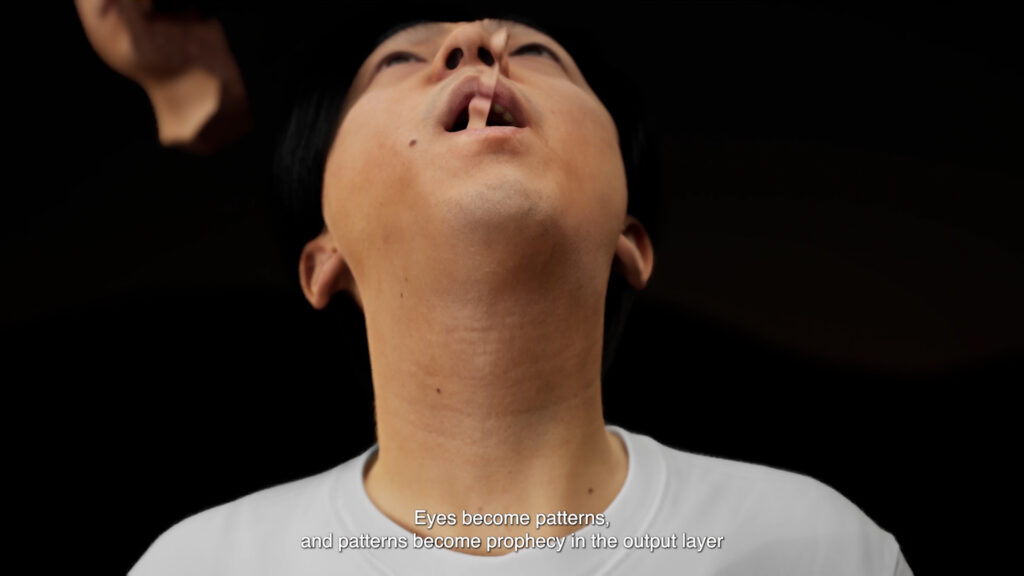
I am wary of technological solutionism that frames everything as a computable problem. From a photographer’s point of view, I find the way vision is datafied into pattern recognition and object detection, and how image-making is all about manipulating image-text embeddings and vectors very problematic.
The way these technologies aestheticise seeing tells us that it positions ‘looking’ and ‘image-making’ as a tedious task to be automated, as if looking itself is not important nor meaningful to human life. I find this very objectionable. Looking, even when it is not producing economic value, is an act of learning itself. It enriches our life. It teaches us empathy. The more we look, the more we know what we like, and we develop our taste. Looking is always cultural and social, rather than purely optical. In fact, this is the basis of the whole scholarship of visual culture.
So computer vision and generative AI are deskilling us from these mental tasks and consequently denying us the possibility of growth from practicing to look, often and intently. Thus, it is a regressive technology.
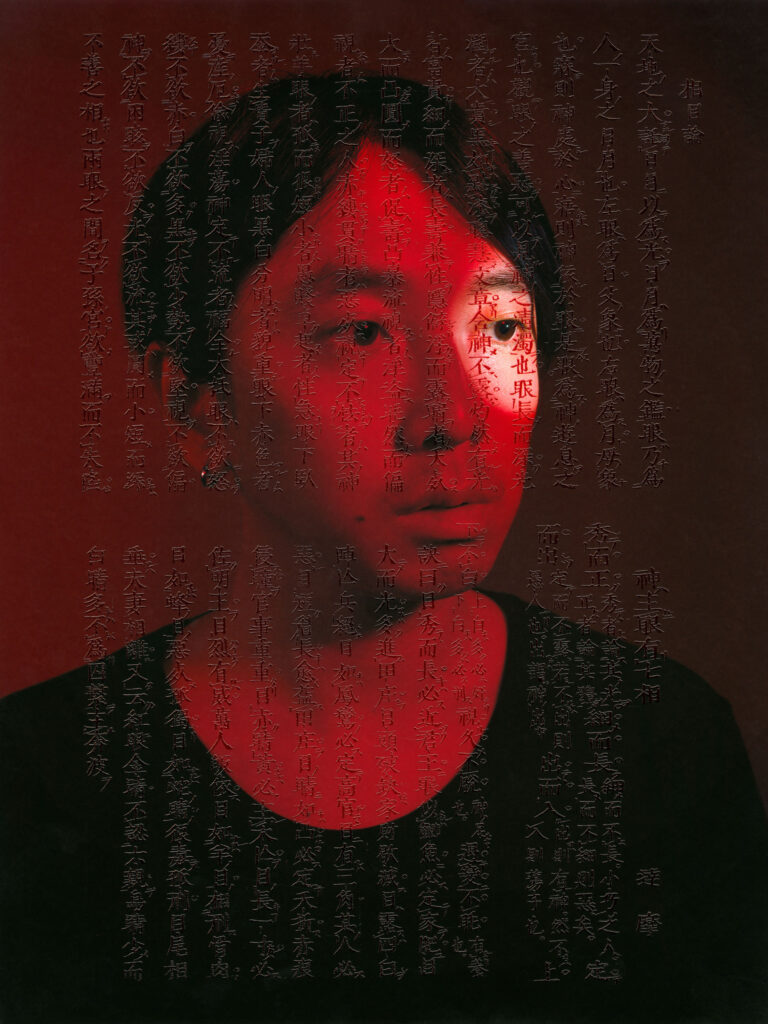
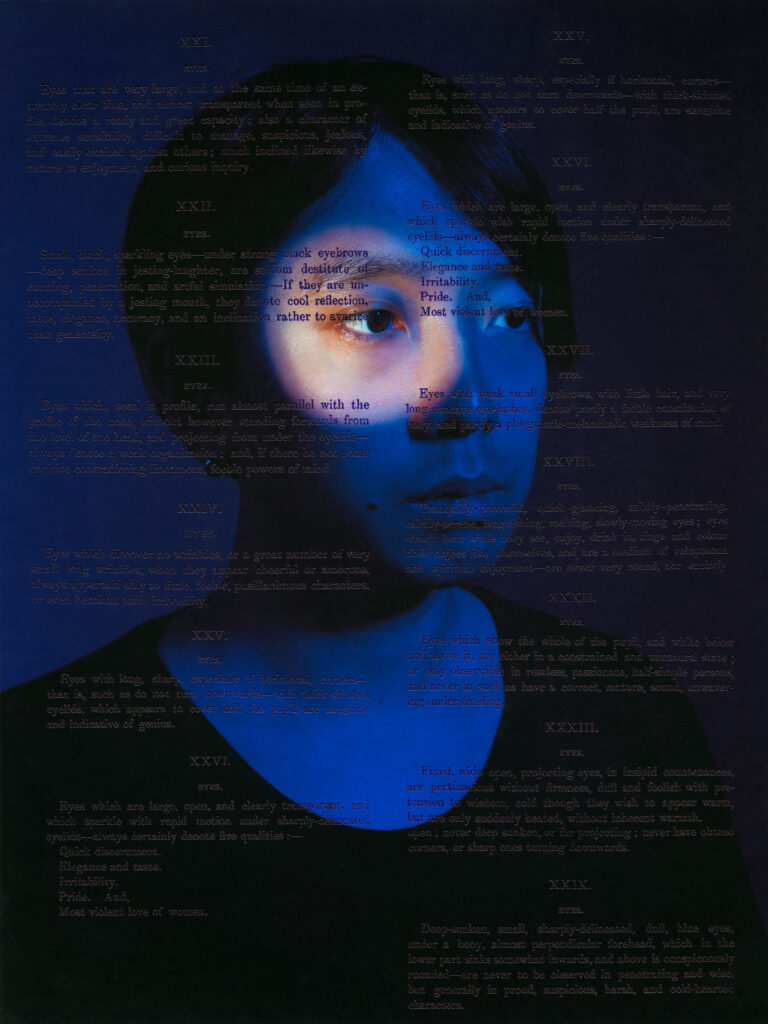
Can you introduce your process for making images or your artistic process more generally?
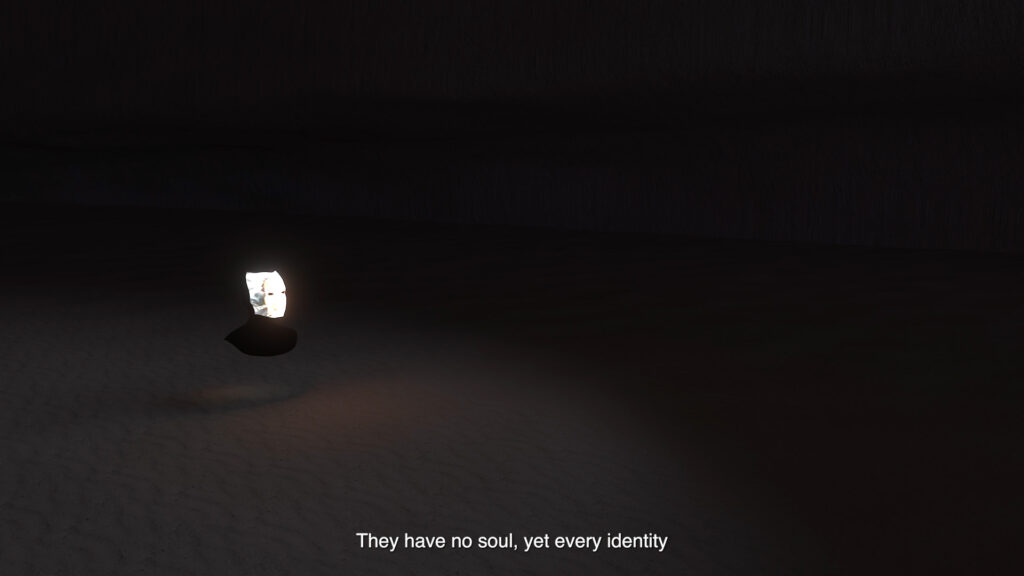
I started as a photographer, so photography is my main medium, and as my interests shifted towards algorithms and digital visual culture, I incorporate emerging visual technologies into my practice. These days, I work with and study expanded photographies e.g., computer vision, photogrammetry, etc. I began by reading about a genre of images emerging from the intersection of computation and photography. Then collaging and mind-mapping, before moving on to creating images. Sometimes that image is a photograph; other times, a point cloud. Either way, these images are my way of exaggerating a certain mode of technological seeing, of a way of aesthetizing the world, e.g., bounding boxes, vector and latent space. I want to make visible again how these ways of seeing are neither neutral nor natural, and act as a mirror to reflect on the complexity of human seeing. How much of what we see and how we interpret an image is not optical but cultural.
How strange that a photograph actually is?
We are fish swimming in the ocean of photography, and so sometimes it’s hard to see how strange a photograph can be; photographic realism itself is an aesthetic. I am paraphrasing Peter Galison here. He wrote about the practice of naturalist illustrators and the notion of truth-to-nature. How, in order to produce a truthful representation of a plant species, the illustrators never just drew a particular specimen, but combined biological characteristics from multiple specimens based on their professional (human) judgement to create the most representational drawing of the species. Photography, on the contrary, favours the particular and the peculiar; they are the root of its authenticity. It is a medium originally based on the power of optics and chemistry to imprint “reality” onto “paper”. This photographic realism ends up defining what counts as real in the 20th century and the early part of the 21st century. Now, generative AI is introducing another form of realism that may usurp photographic realism and again redefine what is real and what matters to seeing in our time.
What kinds of conversations did you emerge between the works of Stateless Mind Pavilion?
We talked about how Stateless is a state of mind, rather than narrowly relating to citizenship and legal statuses. For me, this entails a mindset beyond nationalities that allows us to address issues that impact cross-border and thus require international solidarity, say, climate crises and AI. Most of the artists in this exhibition do not fit neatly into the nation-state framework: some of us are born in one country and now live and work in another; some of our ethnicity does not match the majority of the country we live in. So both as curators and as artists applying for open calls and funding, it is often asked of us to explain our relations to the nations, to prove that what we do represents the nations, when neither of our practices is interested in that question at all. On top of that, as a ‘foreign’ artist, we are often pigeonholed into addressing our identities or our experience of immigration and oppression, which again is not what we are interested in in our art. To quote Tamara’s work, “I just want to live”.
Stateless Mind Pavilion. 16th Gwangju Biennale Pavilion
Neither Here nor There, but Everywhere
Curated by Amir Zainorin, Dalida Maria Benfield and Chris Bratton / CAD+SR, Fadly Sabran, Anna Cuomo, Camilla Boemio
05/09/2026 – 15/11/2026
Seeum, Gwangju
Sheung Yiu (Hong Kong/Finland) is an image-based artist and researcher whose practice explores the relationship between photography, emerging imaging technologies, artificial intelligence, and human perception. Working across photography, video, installation, and artist books, he collaborates with researchers from multiple disciplines to examine how images shape contemporary knowledge and memory.
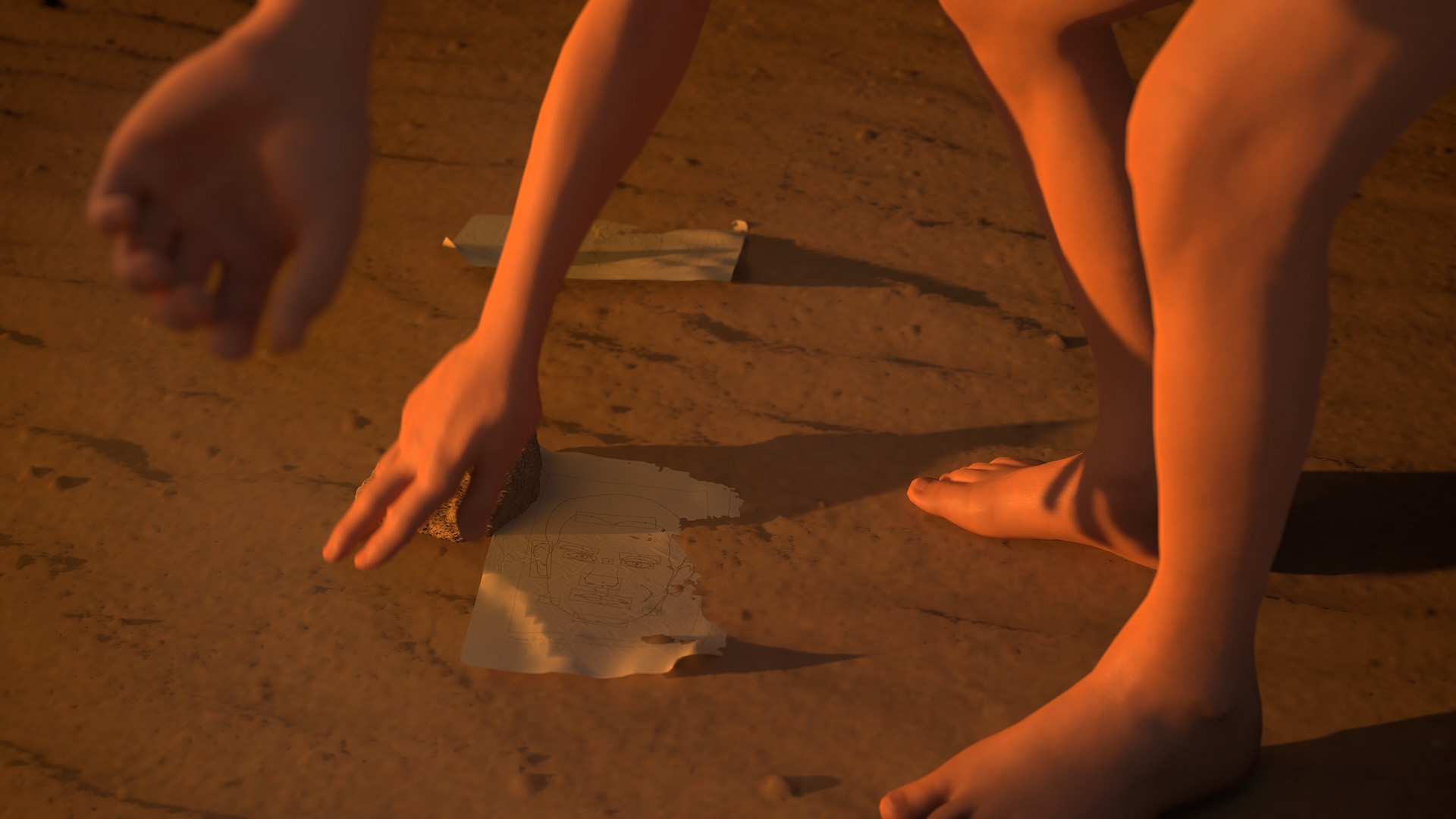
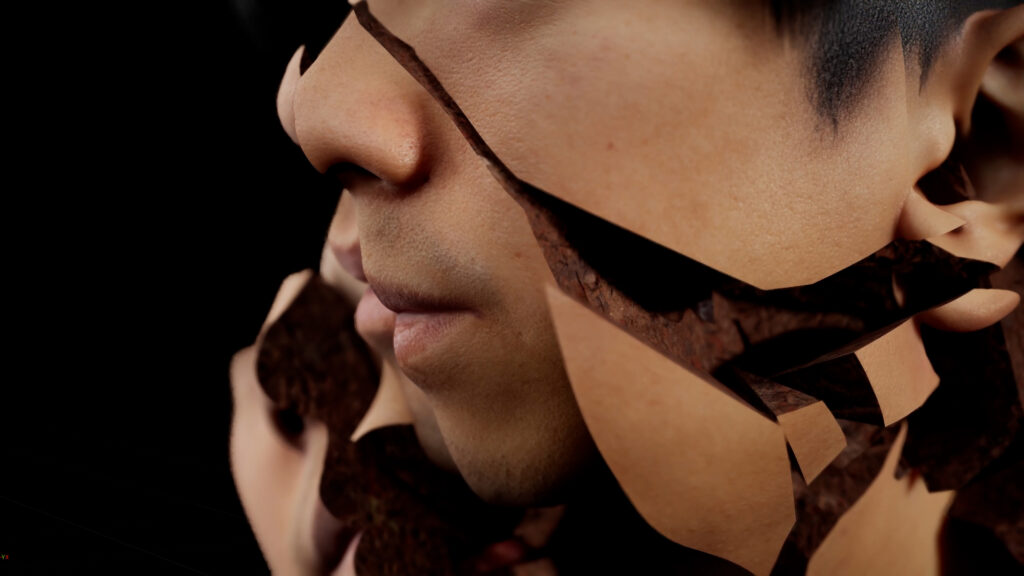
Using his own face, Yiu portrays how similar patterns of thought have been reinforced over the centuries, such as trust in legible signs, a need for order and pre-dictability, and the latent dangers of stereotypical assumptions. He brings together traditional East Asian practices of face reading, Western theories of physiognomy, and cutting-edge facial recognition technologies. In doing so, the artist calls attention to increasingly urgent questions in an era of large-scale computer vision models, anthropometric assessment, and data-based monitoring.
Amidst a Western—and not only Western—stalemate in which democracy is increasingly becoming the preserve of a few government policies, his analysis is attracting aesthetical and open questions increasingly urgent questions. We are living “Interesting Times”.
Tamara Al-Mashouk is a multidisciplinary visual artist whose practice spans sculpture, performance, video, and installation. Drawing on her Saudi-Palestinian heritage, her work explores memory, displacement, hospitality, and the body as a site where personal and collective histories converge. Through strategies of hosting and participation, she creates spaces for encounter, reflection, and care.
Recent solo exhibitions include I don’t want to stab the beast I just want to go home (Incubator, London, 2024) and I’d search forever, I want to remember (Frieze No.9 Cork Street, London, and The Citadel, Dover, 2023). She has also exhibited at 198 Contemporary Arts and Learning, Gallery North, and Incubator, London.
N. September 17, 2026