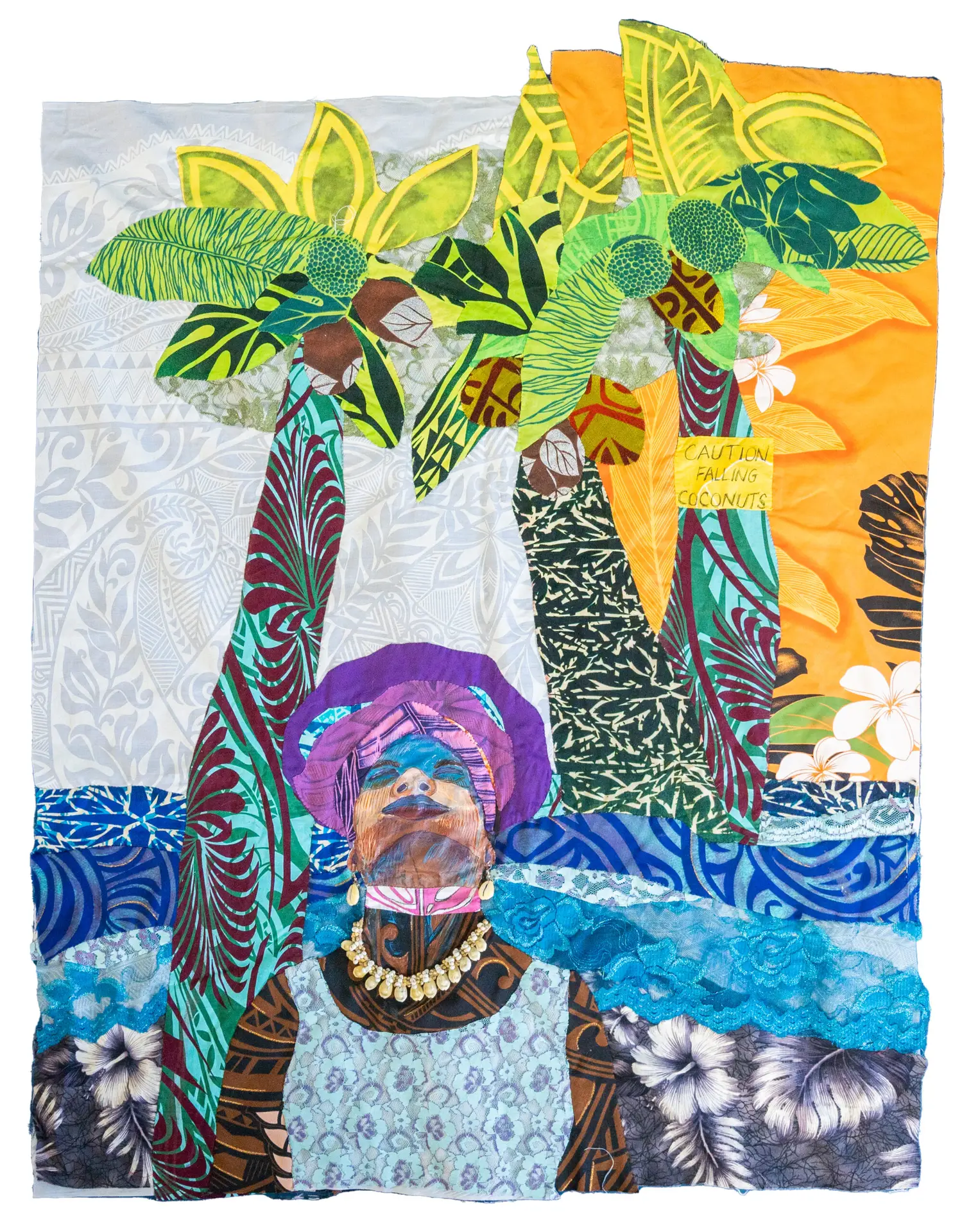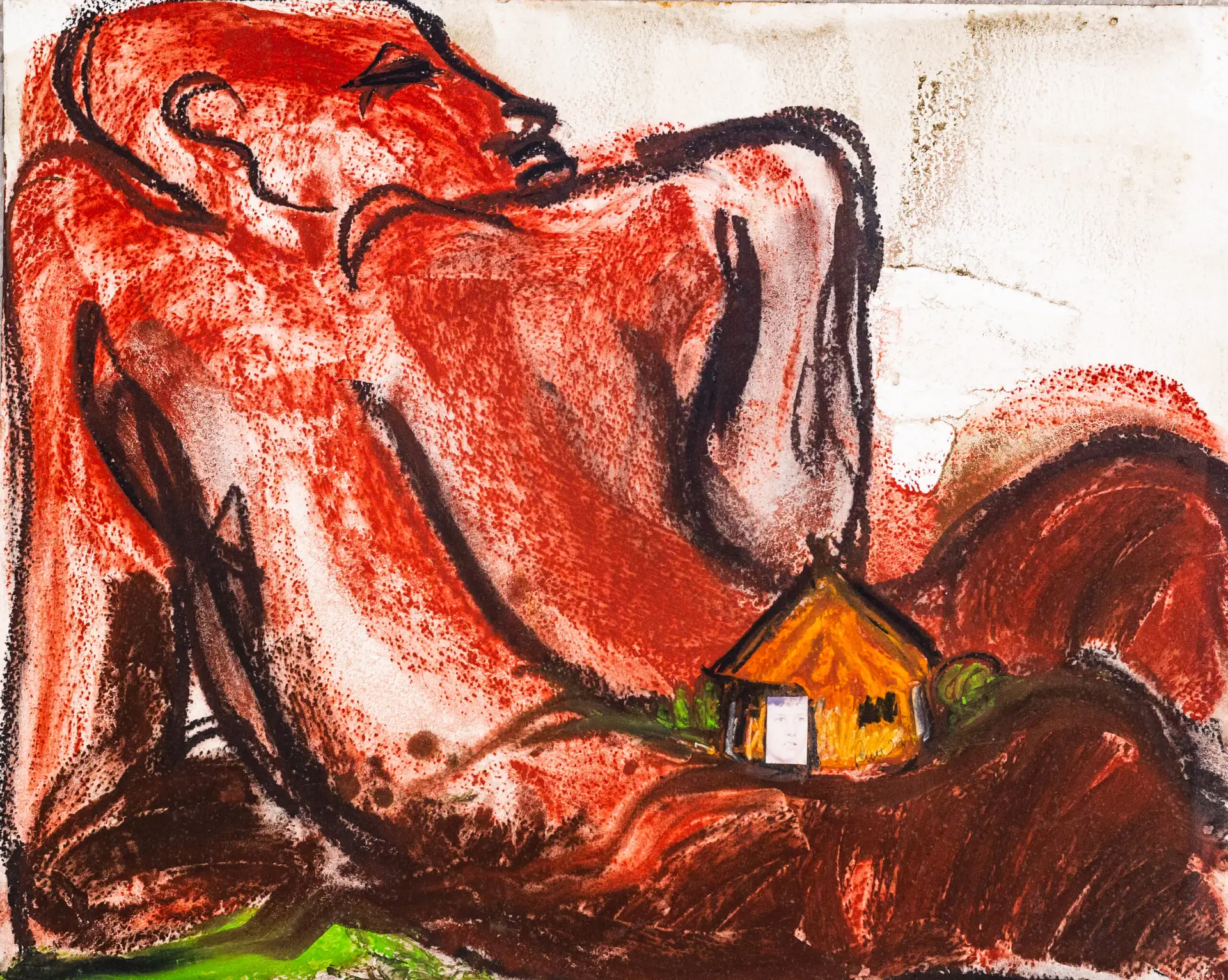
By Sana Ginwalla
Ruth Hartley has spent most of her life in Africa – in Zimbabwe, South Africa and Zambia. She lived for a while in the UK and now lives in France. She is 21 years older than Zambia, 37 years older than Zimbabwe (where she was born), and 51 years older than democracy in South Africa. While Ruth was born into a colonised Africa, she now lives in a post-colonial world.
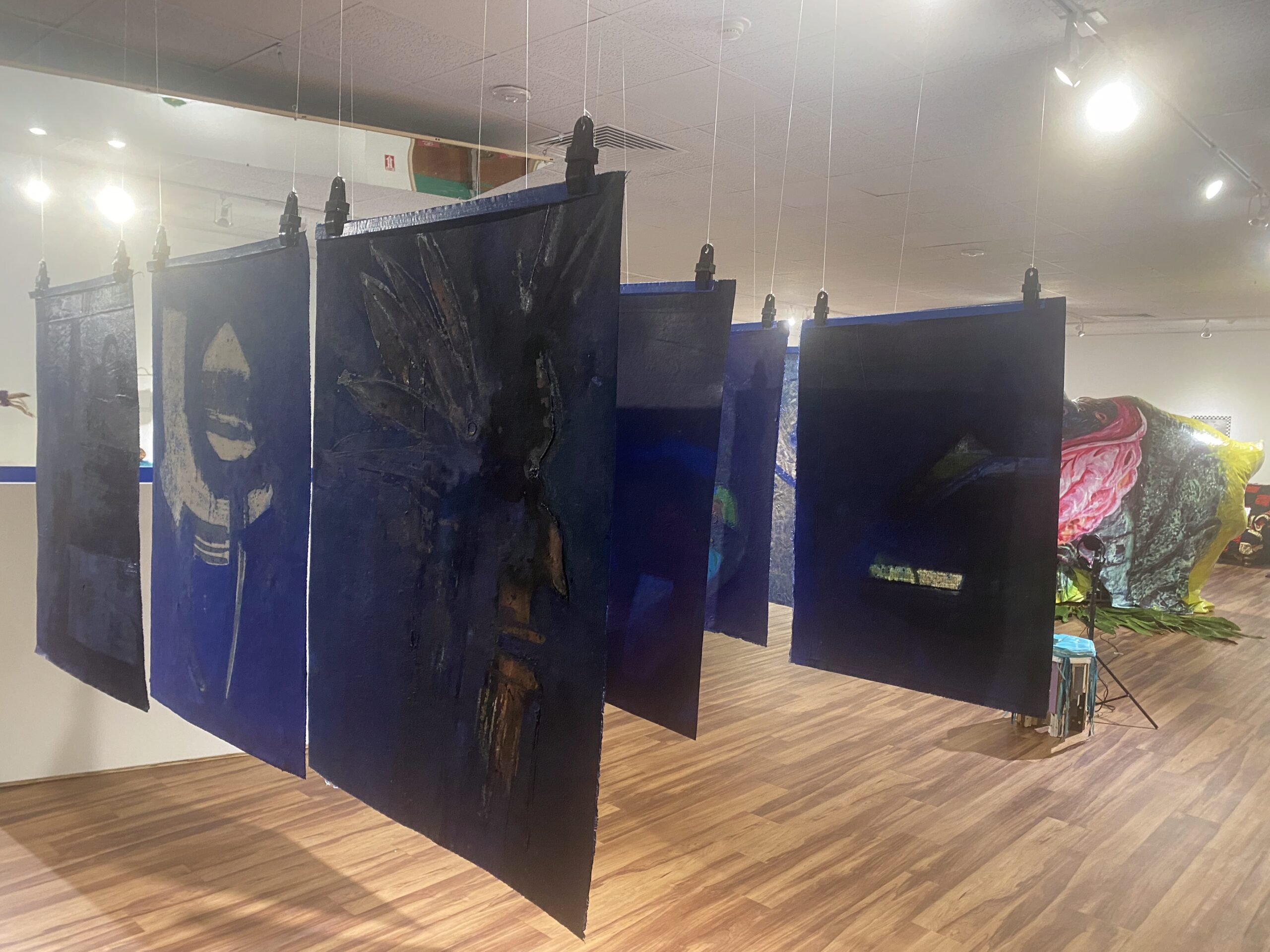
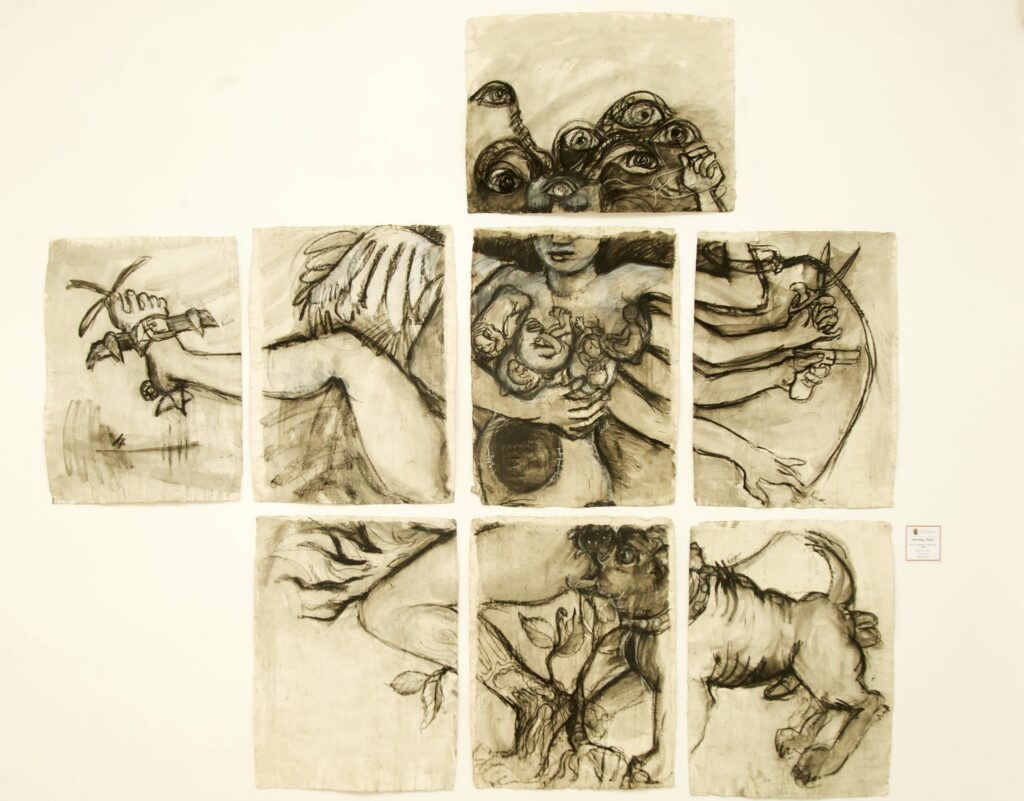
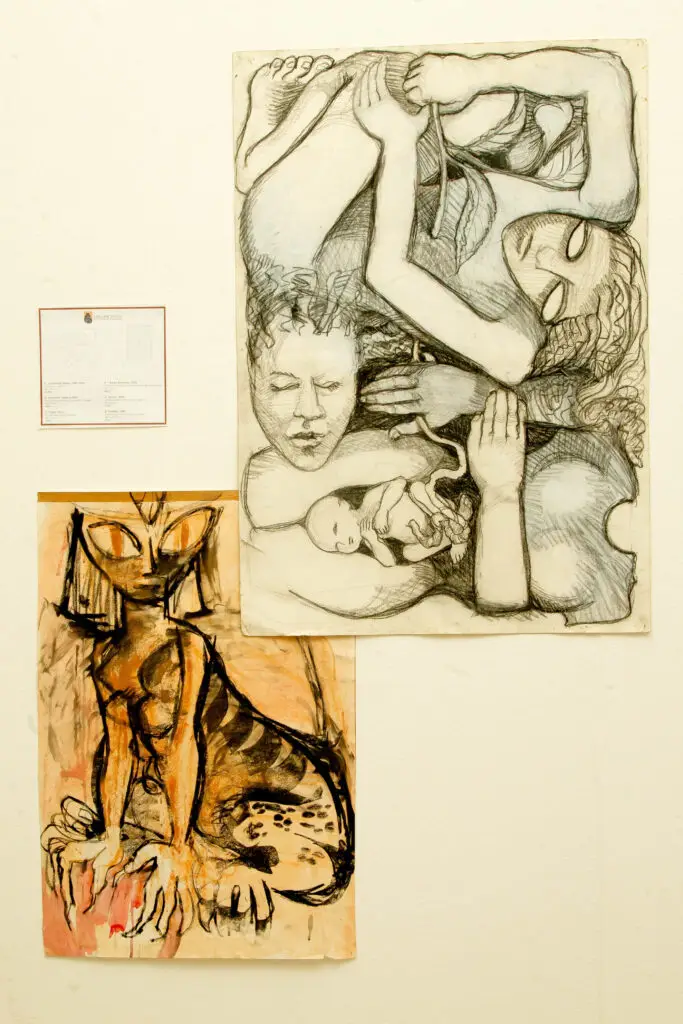
It is in the processes of rapid internal and external change – witnessing war, apartheid, and Africa’s liberation – where the unravelling begins. We see this in “The True History of My Body”, an 8-part charcoal drawing that explores Ruth’s embodied experiences in a figure that is mythological.
During the years that Ruth studied art, she considered herself a Marxist and joined student anti-war protests and the Women’s Movement. This political awakening became imbued in her work, establishing a standpoint that is both observational and resistant, empathetic yet unsettling. In “RAITZ”, Ruth reflects on 9/11, with a faint image of a man falling. This five-panel series is based on one of the most harrowing photographs to emerge from the collapse of the World Trade Centre.
Ruth’s choice of materials – drawings, paintings, writings, dirt, string, canvas, wood and installation – become vessels through which she critically explores personal and political landscapes. For example, “M’Other Art, Deconstructing Damien Hirst” is a series made with cotton nappies. It critically examines how male artists have gained recognition using dirt, human waste and bodily remains, while women’s everyday labour of caring for and cleaning such matter has remained largely invisible and undervalued.
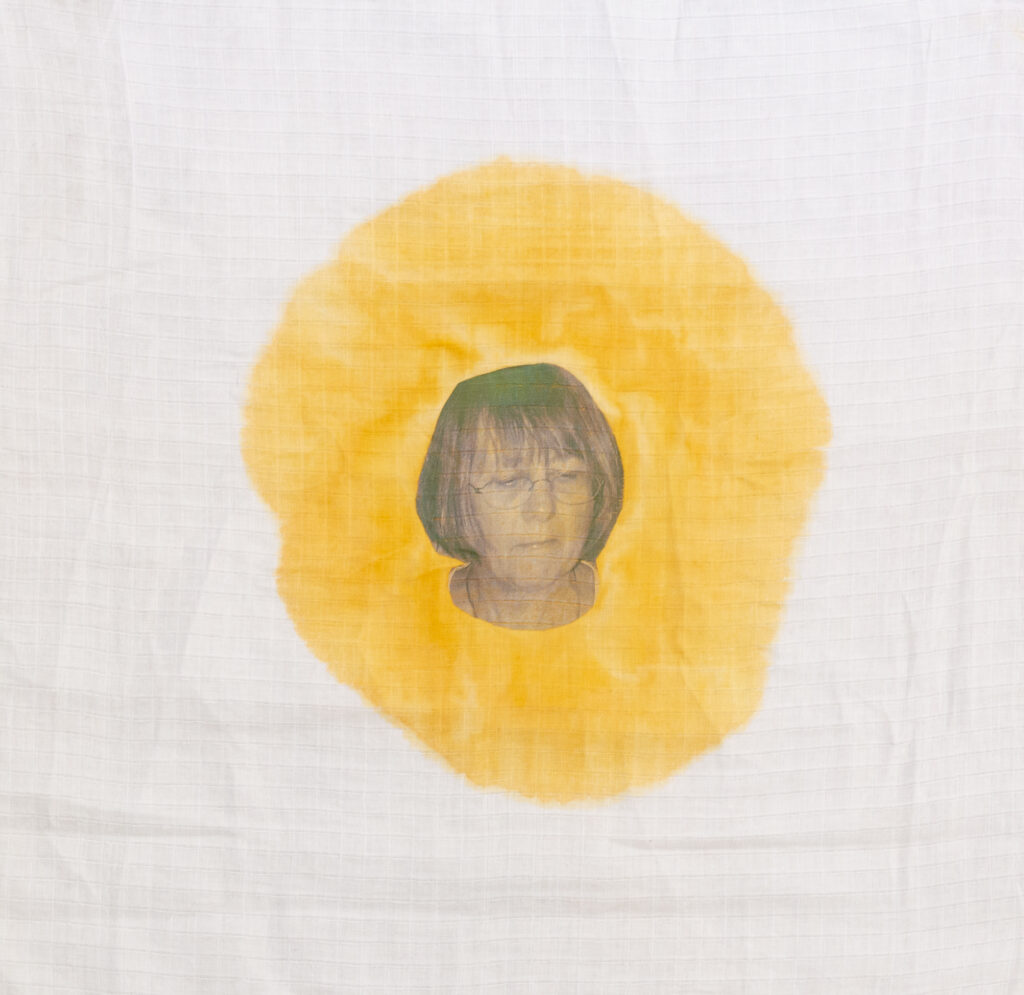
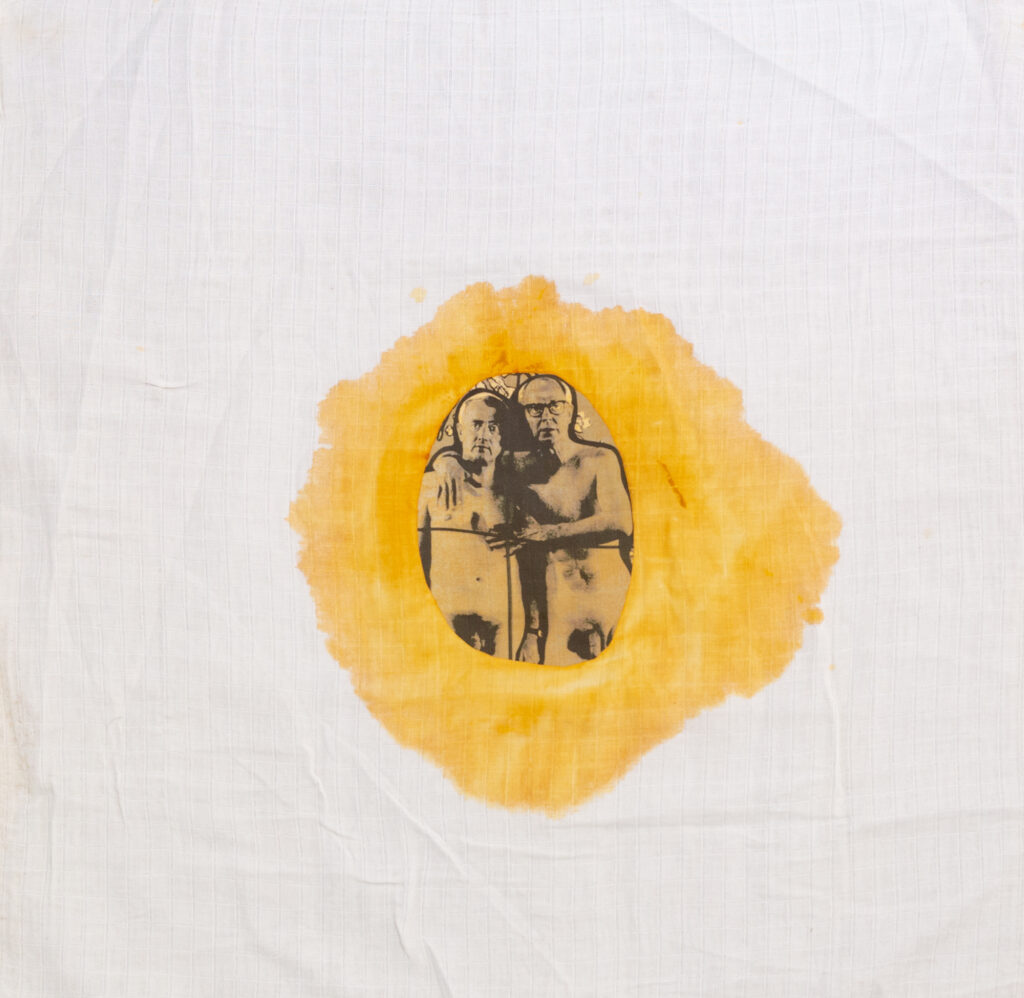
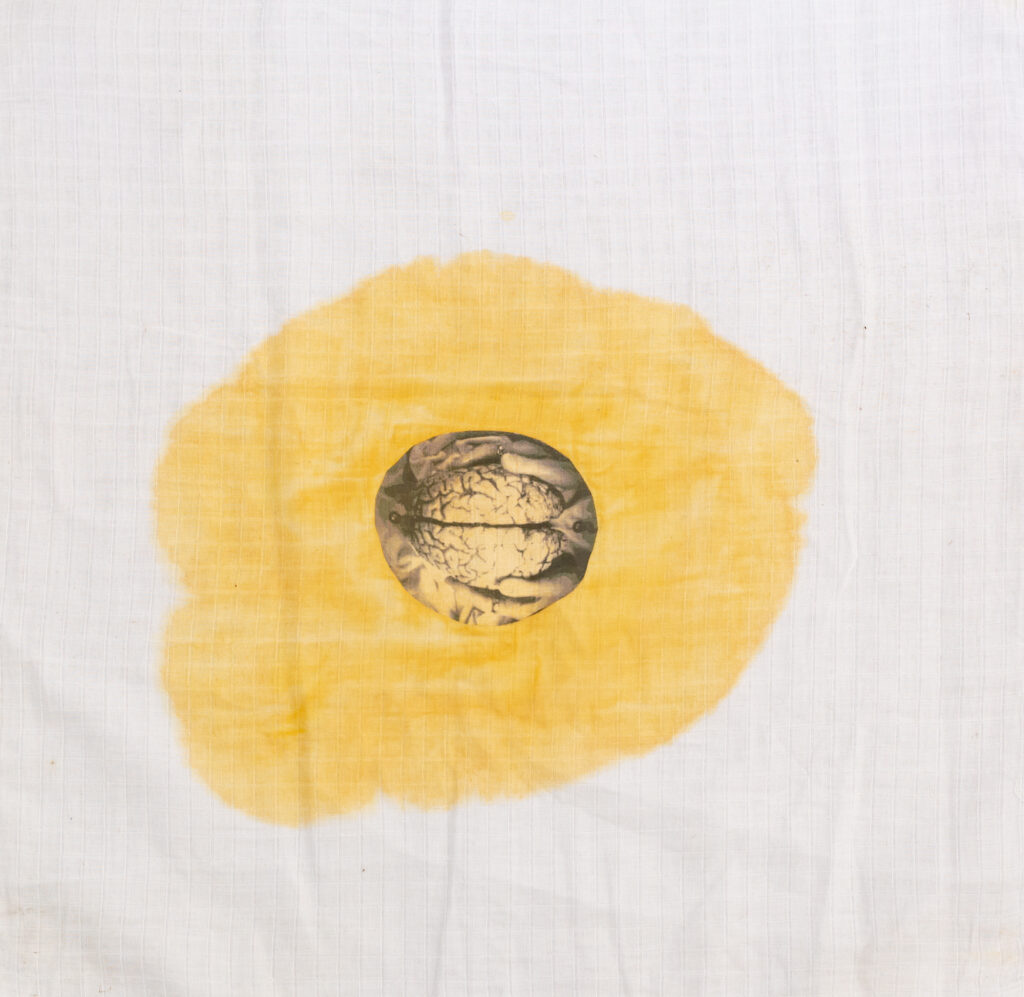
Ruth Hartley, M’Other Art, Deconstructing Damien Hirst.
Ruth’s artistic and literary practice is an articulation of the personal being political. The intersectionality and context of her personal experiences of violence, patriarchy, and motherhood, heavily influence her work. She holds a mirror to society, by offering her own unravelling world as a microcosm of the world we occupy. Her practice continually returns to the role of the artist in society and to questioning the “true” history of anything.
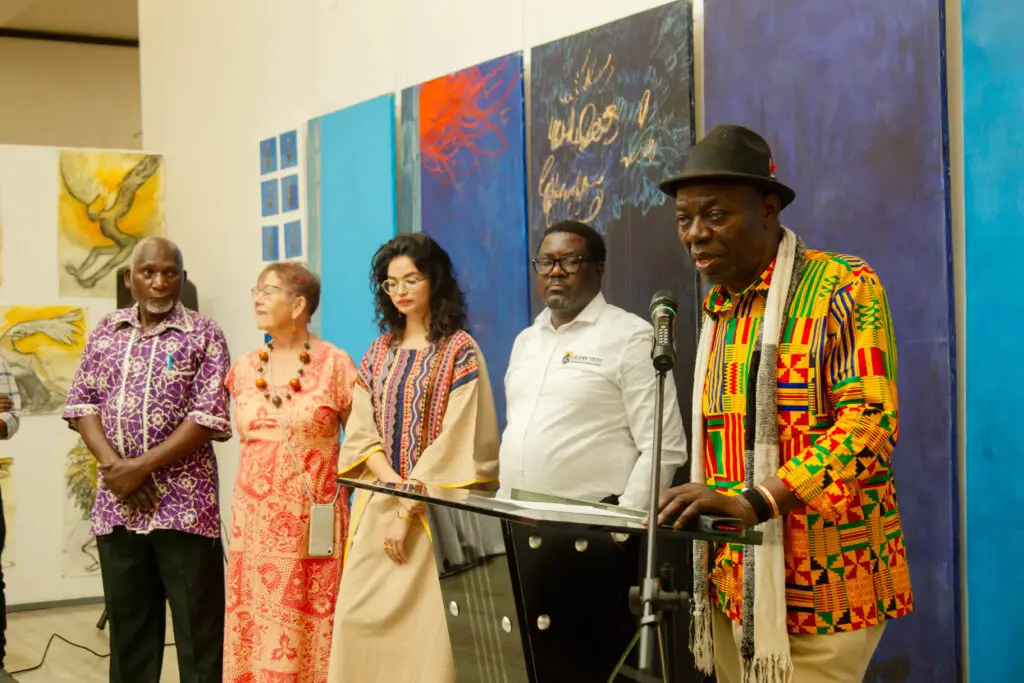
Ruth asserts that the past still surrounds us in the present. The choice to return to Zambia to host a retrospective exhibition – the first time she is exhibiting here since 1995 – at this gallery, is no coincidence. This intentional decision is an ode to Zambia and the many life-changing relationships with artists she developed here. Her work with her late friend and collaborator Cynthia Zukas – with whom she ran Mpapa Gallery from 1984 to 1994 – was seminal in disrupting and deconditioning her views of art through a formal and canonical lens. Instead, working with Zambian artists, she discovered that art can be an expression of individual creativity shaped by experience and circumstance.
As she reflects, while Mpapa “was the womb from which Zambian art began to develop, it was through the artists themselves and organisations like the Zambia National Visual Arts Council that Zambian art grew”. Thus, Zambia cannot be read as only a chapter within Ruth’s large biography. It is one of the places where her understanding of art was fundamentally transformed. Her return is both geographical, historical and conceptual: a return to the questions that continue to preoccupy her practice.
The continuous movement between past and present, departure and return, the personal and the political is how Ruth’s practice unravels. Yet to unravel is not necessarily to come undone. It can be to loosen what has become fixed, to examine the threads that have bound us to history, and to consider other ways of existing in the world.
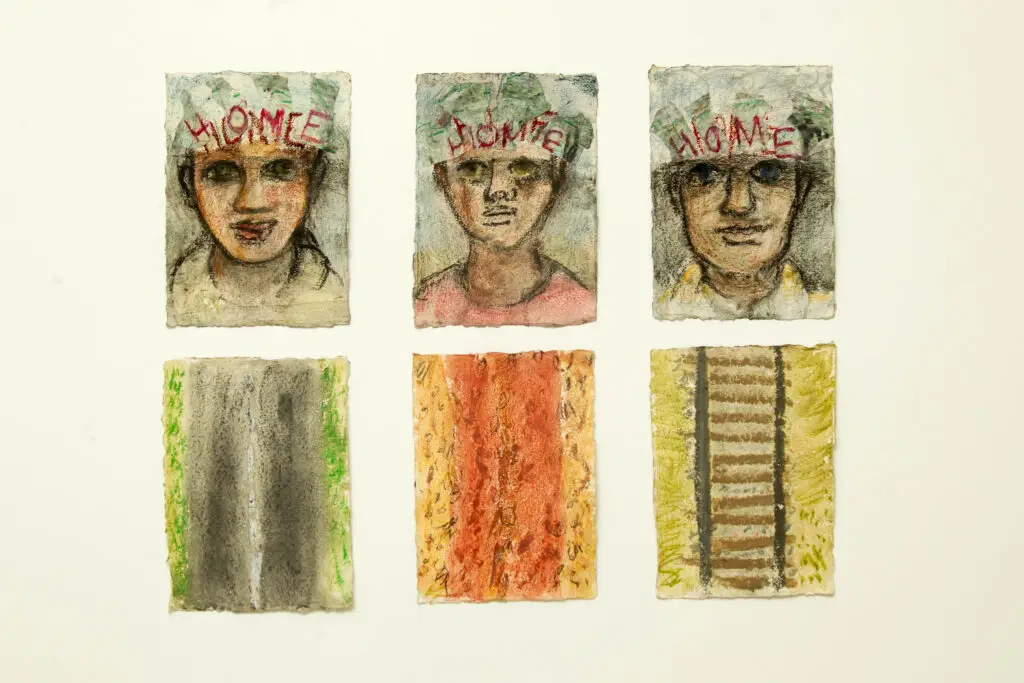
Ruth Hartley (b. 1943, Harare), is an artist whose practice signifies a lifelong ritual of contemplation. Her work explores the intersection of identity, political change, and the impact of colonial and post-colonial histories. She explores what action looks like in an artistic practice, in both presenting and challenging the histories we are taught. Hartley’s interest in political and social change began early, during her school and university years, and was further deepened after she moved to London in 1966. She studied at the London School of Economics, where she became actively involved in the Vietnam War protests and the Women’s Movement.
Hartley completed an MA in Women’s Studies at Anglia Ruskin University. Her research focused on the concept of ‘non’-identity, creating a video work entitled “Between the Lines” which examined hidden or unspoken truths. This exploration of identity continued to inform her art, as she often critiques both her personal identity and the societal labels imposed on her.
Hartley’s work is inherently political, often using installations as a primary mode of expression. In 2006, her exhibition “The ‘True’ History of My Family” at Castle Lane Gallery in Bedford addressed the contrast between the colonial history she had been taught and the post-colonial history she knew, offering a personal reflection on history and identity.
It was her time at the Mpapa Gallery in Zambia, though, where her creative practice transformed: Hartley credits this experience and her visit to the 1989 Habana Biennale in Cuba as a turning point in her career. Inspired by these experiences, she began creating installations that physically embody her explorations of untangling, unknitting, and unravelling ideas.
Her 2015 installation “Tangled Knitting”, part of the Corpus exhibition at Peleyre Gallery, visualized the complex roads we take through life as we age. She questions who we become, when we unravel ourselves from the contexts that created us.
Hartley continues to center herself in her work as a means of critiquing not only her own identity but the role of the artist in society. Despite her deep engagement with art, she reflects on the challenges of making a living from her creative practice.
Unravelling. Ruth Hartley
Curated by Sana Ginwalla
16/10/26 – 15/11/26
Lechwe Trust Gallery
The Gallery Office Park, Plot 4015, Lagos Road, Rhodes Park
Lusaka, Zambia
N. November 1, 2026