By Camilla Boemio
Founded in 1995 in memory of spirits of civil uprising of the 1980 repression of the Gwangju Democratization Movement, the Gwangju Biennale is Asia’s oldest and most prestigious biennial of contemporary art. It honors the “Gwangju Spirit” by employing art as a vital medium to convey universal messages of democracy, human rights, and peace to a global audience.
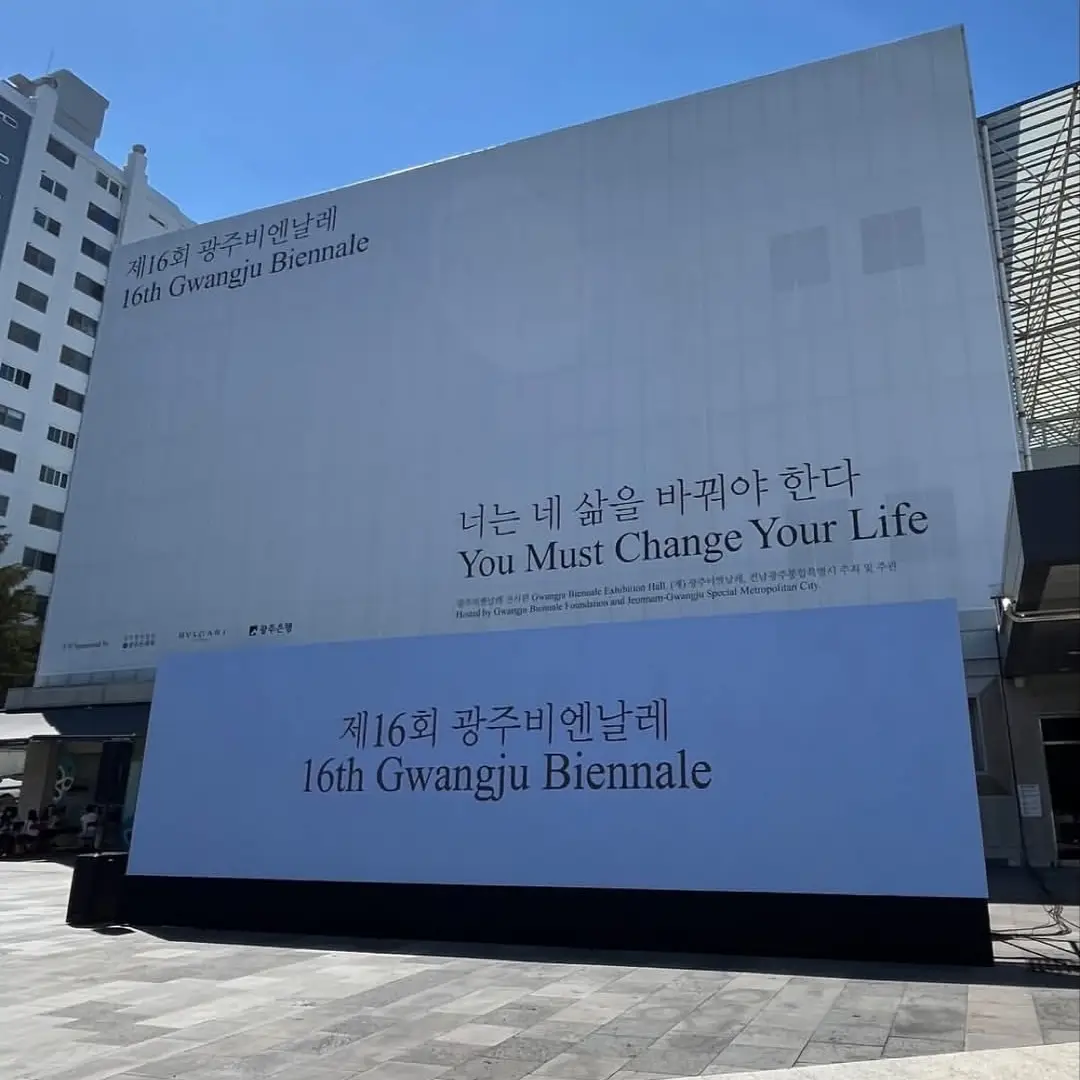
This edition, You Must Change Your Life, opens to the public on September 5, 2026. Curated by Artistic Director Ho Tzu Nyen with Che Kyongfa, Gahee Park, and Brian Kuan Wood, the exhibition brings together 43 artists and groups who have spent years—in some cases, entire lifetimes—exploring how change unfolds across every conceivable scale.
The 16th Gwangju Biennale, runs from September 5 to November 15, 2026, and features also expanded national and institutional pavilions across the city; this year more then the past not only national but as in the case of Stateless Mind Pavilion relevant and provocative stateless art projects.
The Gwangju Biennale Pavilion was inaugurated to pursue a vision of globalization grounded in regional identity while fostering connection between art institutions in Korea and overseas as an accompanying project of Gwangju Biennale in 2018.
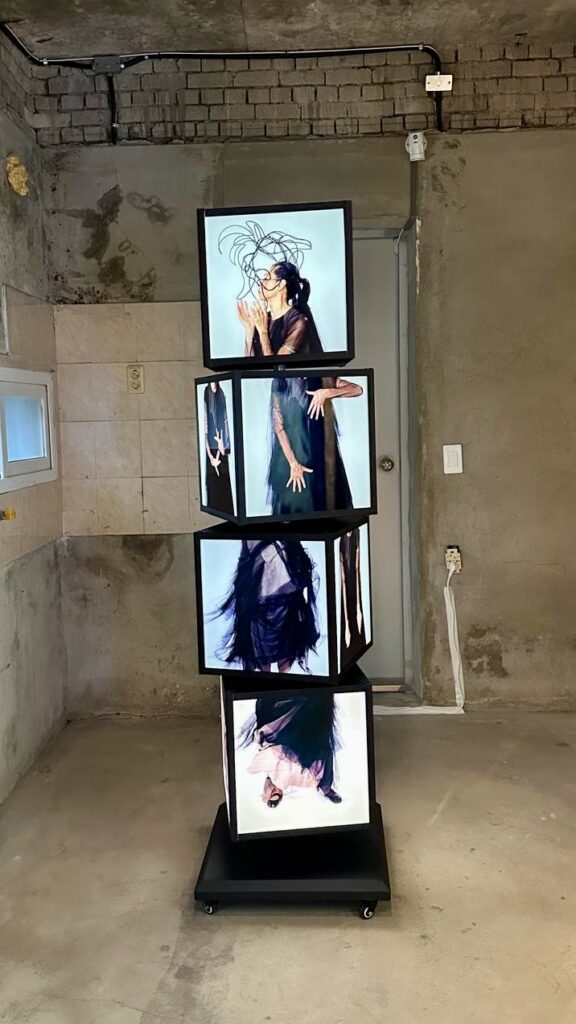
Stateless Mind emerged from the critical thinking of Malaysian-Danish artist and curator Amir Zainorin. According to him: “A pavilion does not have to represent a nation. It can represent an encounter – a temporary space created by people who choose to think and work together”.
The Stateless Mind Pavilion (SMP) explores forms of identity and belonging that exist beyond fixed national, cultural, or geographic frameworks. It addresses the lived realities of displacement, migration, and in-between belonging, where individuals navigate multiple cultural and social contexts without fully aligning with a single one. The Pavilion is developed through a Nordic–Southeast Asian collaboration led by Jambatan, in partnership with the Center for Arts, Design, and Social Research and Kapallorek Artspace. Its curatorial approach is collective and process-oriented, emphasizing shared authorship, distributed decision-making, and the coexistence of diverse perspectives rather than a unified narrative. Presented at Seeum in Gwangju, the Pavilion functions as an adaptive platform, activated through installations, performance, sound, and public programming. A key component is Stateless Processions—guided walks through the city that frame movement as both an artistic and a critical method, encouraging alternative readings of urban space in relation to visibility, access, and control. Rejecting the conventional model of national representation, SMP positions itself as a transnational, artist-led platform. It builds on previous initiatives such as the Stateless Mind Festivals, Amir Zainorin’s exhibition at Museo delle Mura in Roma (last winter) and international residency collaborations, extending these networks into the Biennale context and beyond.
As I see it, the Stateless Mind Pavilion is a fertile microclimate; by rejecting national affiliation, it opens up a cross-cutting dialogue, creating unspoken modes, short circuits, cross-pollinations, and archipelagos in the making—spaces where unexplored territories of research emerge.
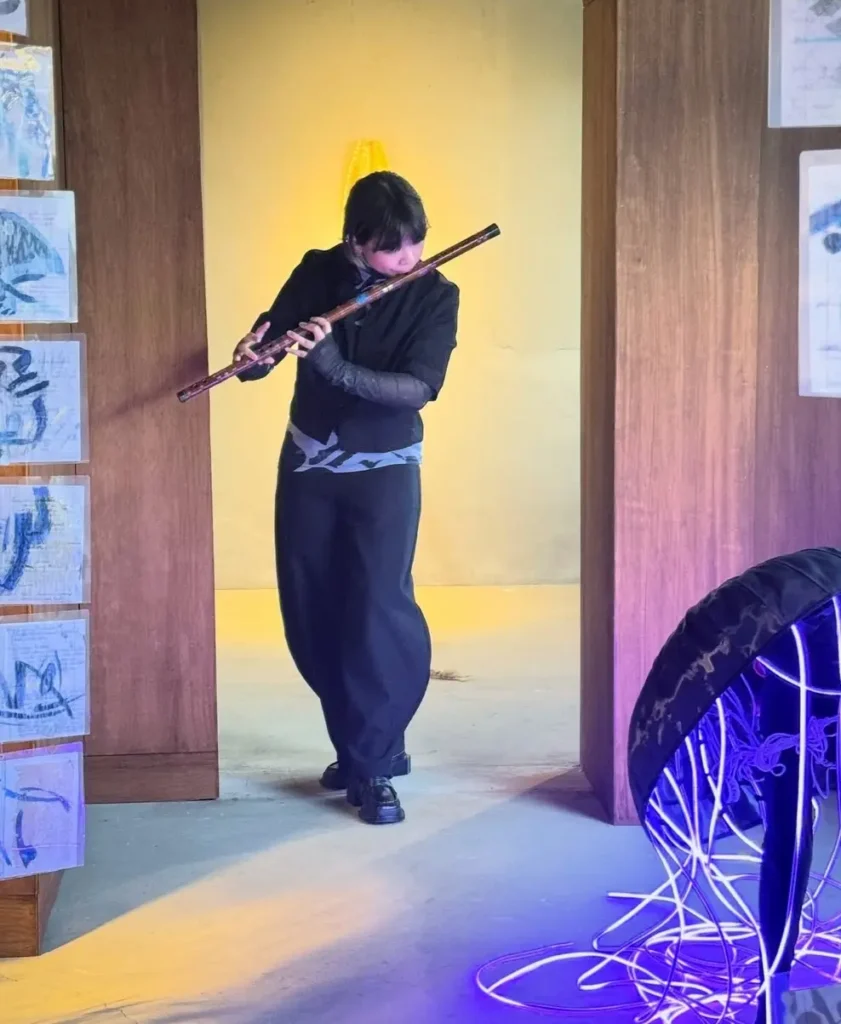
I spoke with the artist involved in, Lilibeth Cuenca Rasmussen.
Your artistic language combines theatricality with critical inquiry, often infused with irony. Costumes, songs, ritualized gestures, and staged environments function as tools through which you examine different dimensions of identity: ethnicity, gender, religion, colonial inheritance, and belonging.
Sculptural costumes, elaborate textiles, masks, and immersive installations blur distinctions between performance, ritual, and visual art. How did you choose them in your performance practice?
I think of myself as an anthropologist. I am interested in human societies, cultures, origins and ethnicity. My inspiration comes from concrete incidences from real life. It can be a historical matter, a phenomenon or science. I enjoy transforming factual knowledge into an artistic language and expression.
How did you choose this amazing jellyfish for opening of Stateless Mind Pavilion at 16th Gwangju Biennale?
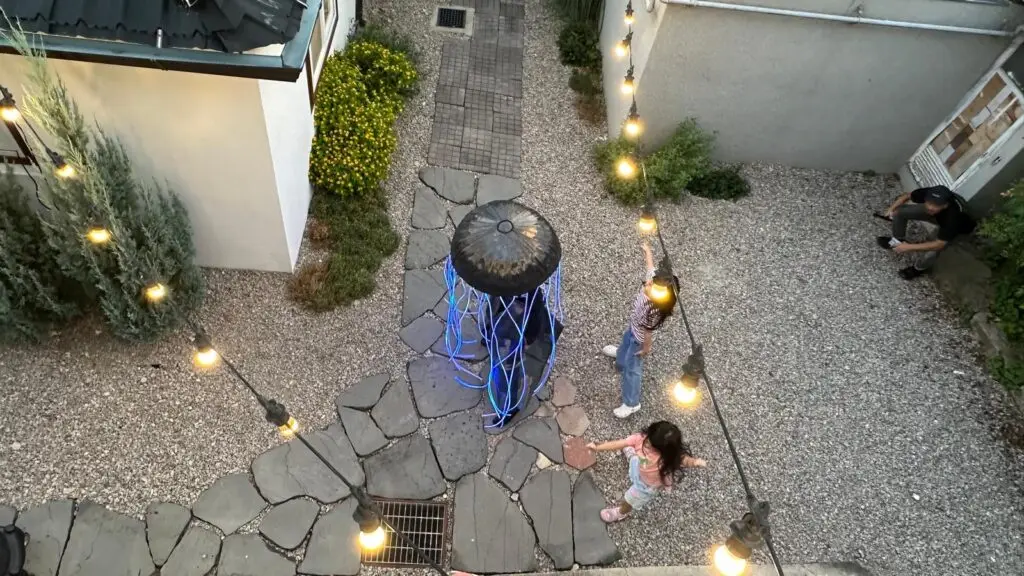
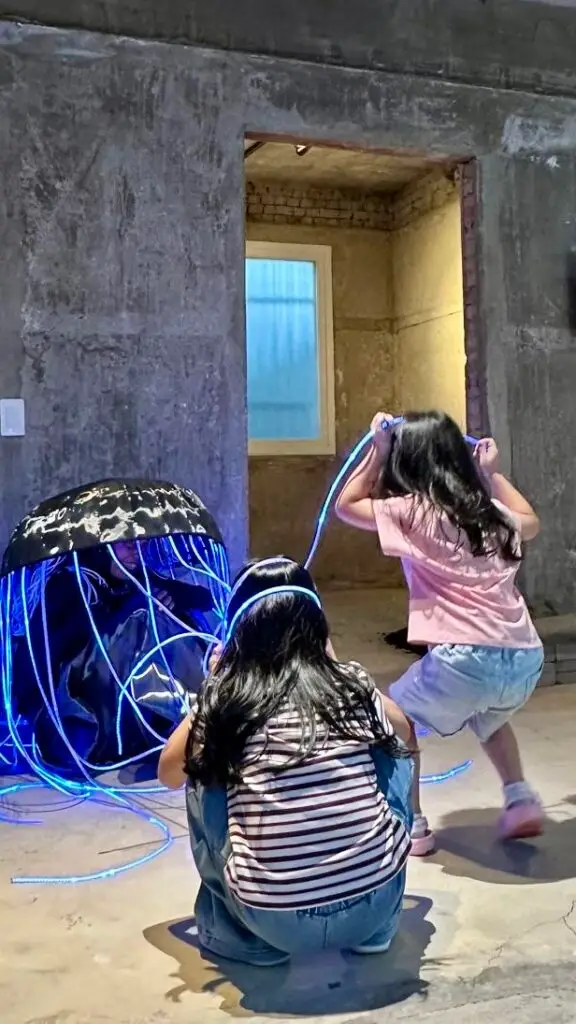
Turritopsis Forever is inspired by the specie Turritopsis Dohrnii / The immortal jellyfish, an extraordinary creature, that has existed on our planet since the beginning. It possesses regenerative abilities and can restart its life in an endless cycle. Turritopsis Forever aligns in the content of “You must change your Life” Gwangju Biennale´s head topic, in questions and reflections on the re-generative, immortality and recycling. The performance is based on body movements and interaction. I wear a technology-based costume constructed from LED lights, EPS, cables, the costume can change color of light with different animations.
In Gwangju I partially performed with artist and musician grace xu, who played the flute. Turritopsis Forever opens a space for questions, reflection, and self-awareness concerning regeneration, cycles, time, and existential being.
The anthropomorphic is a recurring element in my work. The immortal jellyfish, reflects on our contemporary lives and needs on the re-generative, recycling, longevity, and our strive for immortality
Collaborations have been an important part of your practice across performance and installation. Also, in participatory and choral project like this, Stateless Mind Pavilion. How means to realize a common project?
Working cross-aesthetically with collaborations especially with components of music, choreography and costume design has been essential since my early performance practice. I intend to continue in this direction as I see it as a very fruitful way to expand and develop my practice. Next week I will be in Ulaanbataar Mongolia for the XAOS International Festival of Experimental Music and Visual Art and collaborating with local and other artists, musicians and engaging in new constellations.
Text has played an important role in your performances. Does language occupy a central place in your artistic research?
I am a storyteller. Text is often a basic element in my work. I consider text as a material, I can shape and play with, like clay. I playfully sculpt with language and words, also in a stringent formalistic way. My language unfolds in rhymes, songs, sonnets or similar structures, sometimes my text contains several languages, I make up words…. I believe in an open narration, that engages that activates the recipient.
How did you arrive at performance as your primary medium?
Performance can perfectly activate engagement, participation and confrontation, which are central elements in my work. When I translate a performance into another medium, it could be photography, video or sculpture, they can´t trigger -confrontation in the same way. The live element and presence in performance is essential and powerful I use this.
How do the narratives within your performances emerge?
Good question. Context and working site specifically are good starting points. I begin to do research on the place, dig into historical facts and etymological content, these simple approaches lead me to something, that catches me and motivates to move on, until my idea has taken shape.
For instance, by using scientific facts and transforming them into a visual expression and language, it is a method for me to digest and learn about scientific knowledge; I might find difficult to understand. This is prominent in the work Cocktails from 2021, which concerns the nomadic and DNA. In this piece science is digested and served in rhymes in a rhythmic playful way.
Stateless Mind Pavilion. 16th Gwangju Biennale Pavilion
Neither Here nor There, but Everywhere
Curated by Amir Zainorin, Dalida Maria Benfield and Chris Bratton / CAD+SR, Fadly Sabran, Anna Cuomo, Camilla Boemio
05/09/2026 – 15/11/2026
Seeum, Gwangju
Lilibeth Cuenca Rasmussen (b. 1970, Manila, Philippines; lives and works in Copenhagen, Denmark) is an internationally acclaimed performance artist working across performance, video, installation, and sculpture. Her practice explores identity, migration, gender, cultural hybridity, and belonging, often drawing from her Filipino-Danish background to examine how personal narratives intersect with social and political histories.
She has presented performances and exhibitions at major international institutions including Tate Modern (London), Brooklyn Museum (New York), KIASMA Museum of Contemporary Art (Helsinki), SMK – National Gallery of Denmark, Copenhagen Contemporary, and the Venice Biennale. Since 2019, she has been Professor of Performance and Time-Based Art at the University of Bergen, Norway.
Grace Xu 徐栩 (b. 2001, New Orleans) is an artist based between Muwekma Ohlone Territory (California) ⇆ 江西 Jiangxi.
They work across lens-based media, print matter, ceramics, sound, and site-responsive improvisations to explore the world-building possibilities of collective memory, diasporic trajectories, and spi-ritual cosmologies. With a voice of emotional tenderness in response to our ever unfolding present, their practice finds power in community and in conversation with our human and more-than-human world. They hold a B.A. in Art from the University of California, Los Angeles with a Minor in Community Engagement and Social Change.