By Arianna Maria Leva
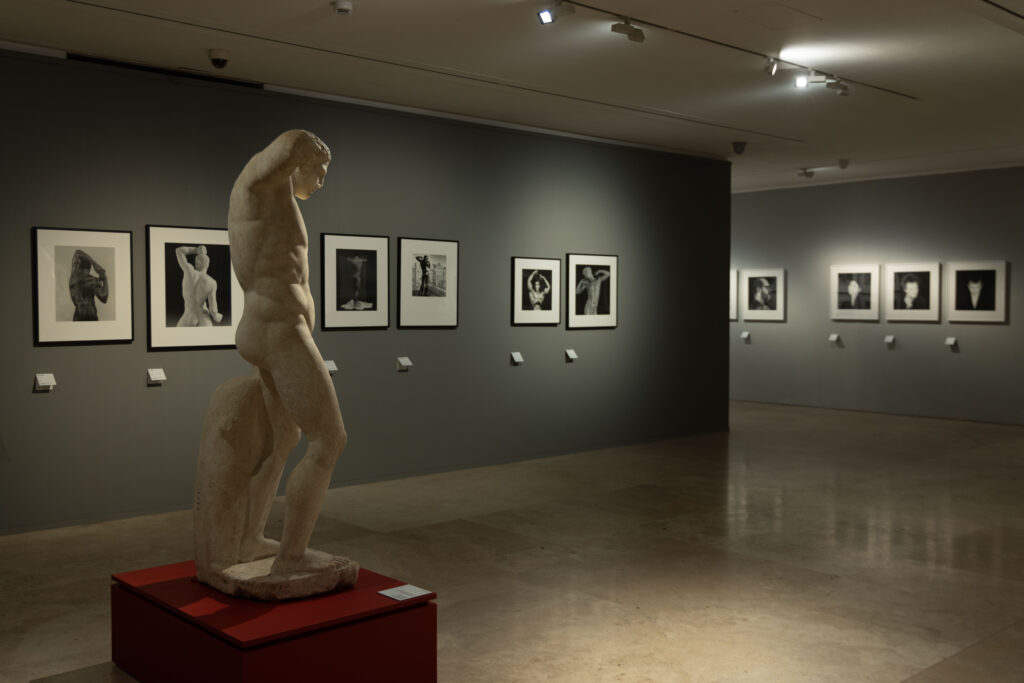
There are exhibitions that scandalize, and then there are exhibitions that leave behind a more difficult kind of unease. It does not arise from provocation, which by now has become almost predictable, but from something in the image that remains unresolved, the feeling that the photographs themselves contain a knot that cannot be untied. Le forme del desiderio (Forms of Desire), the retrospective dedicated to Robert Mapplethorpe at Palazzo Reale and curated by Denis Curti, belongs to this second category: an exhibition that the institution continuously attempts to order and contain, while the photographs themselves continuously exceed that frame.
The title already functions as a threshold, or rather, a crack one must pass through. Forms of Desire. The word “form” carries a weight that translation tends to flatten: it means outline, but also mould, model, the shape imposed upon a thing. And desire, within Mapplethorpe’s visual universe, is never innocent in relation to form. It is always already architectural: constructed, illuminated from a precise angle, by a precise hand, for a precise gaze.
What the Walls Do Not Say
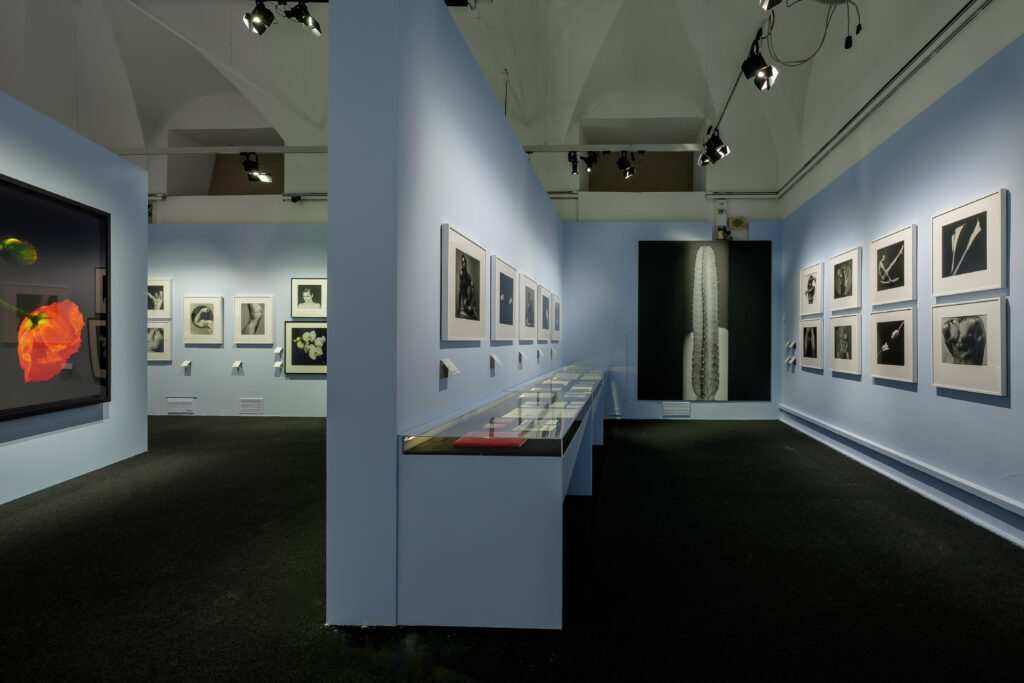
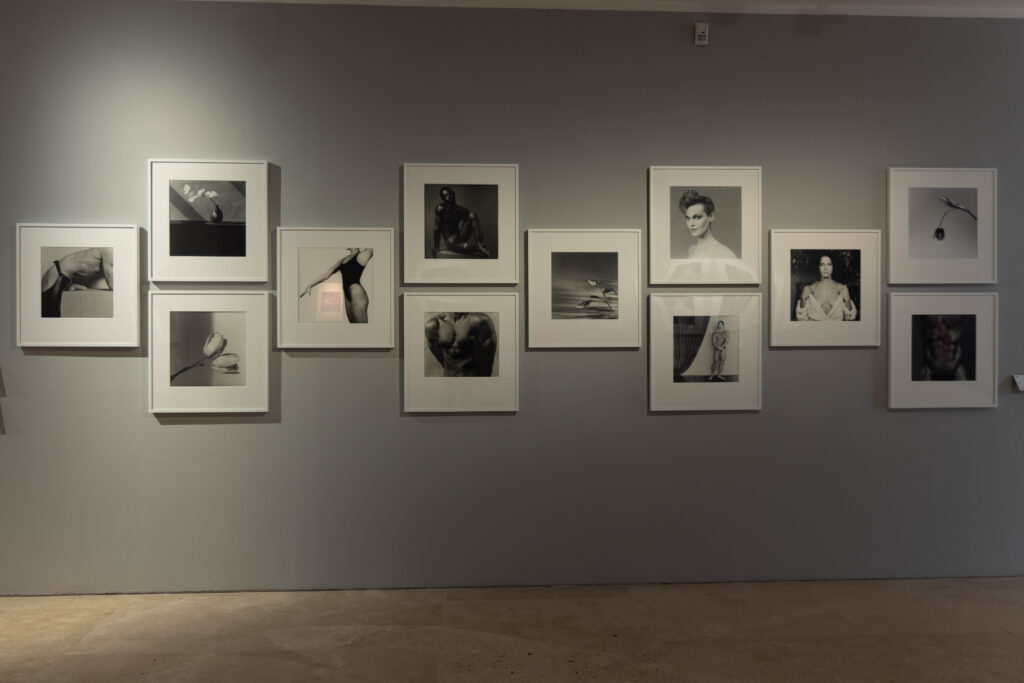
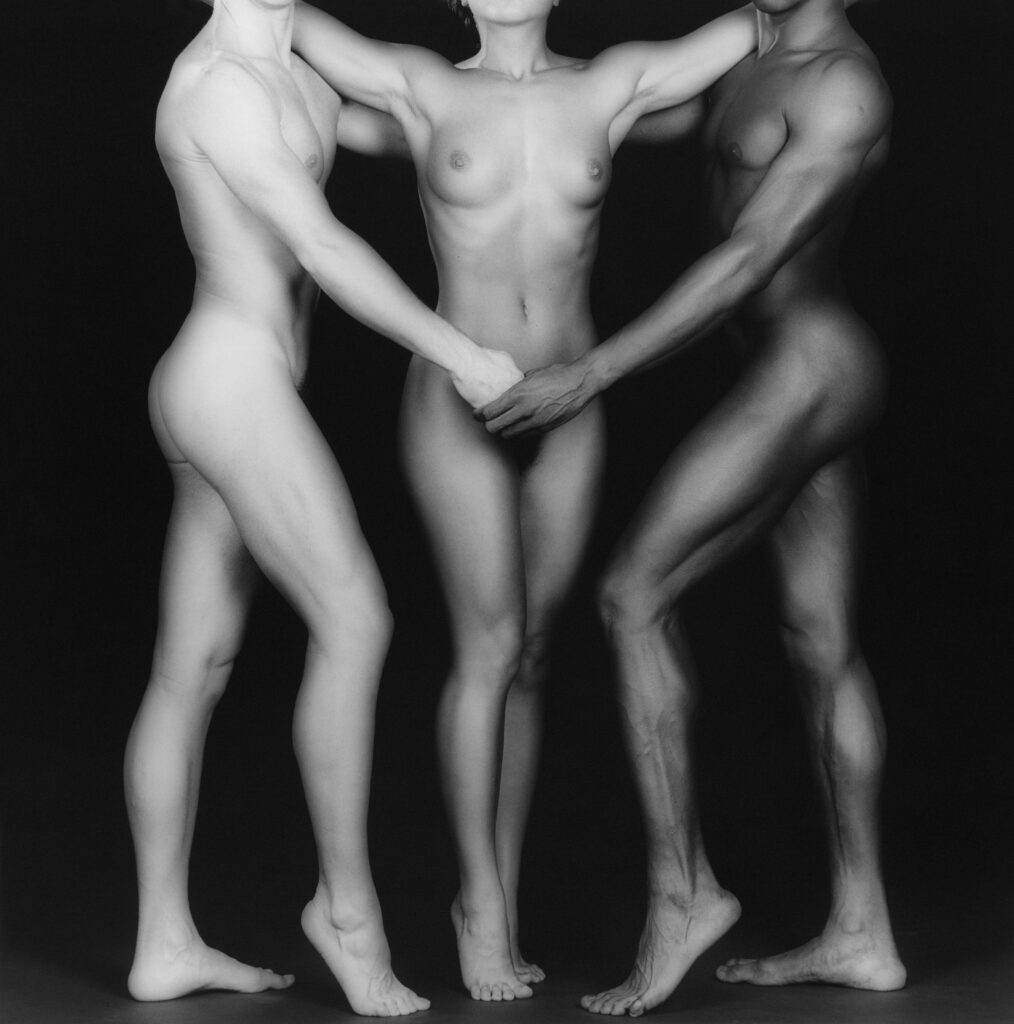
The exhibition unfolds through sections, collages, portraits, Lisa Lyon, Patti Smith, nudes, flowers, statues, and this organizational logic is itself a choice, and a revealing one. Thematic segregation performs a kind of domestication: each category becomes a room within a highly elegant house, and the visitor moves through it as though through a carefully curated life, admiring the formal precision, the chiaroscuro that owes more to Caravaggio than to photojournalism, the almost surgical relationship between light and surface.
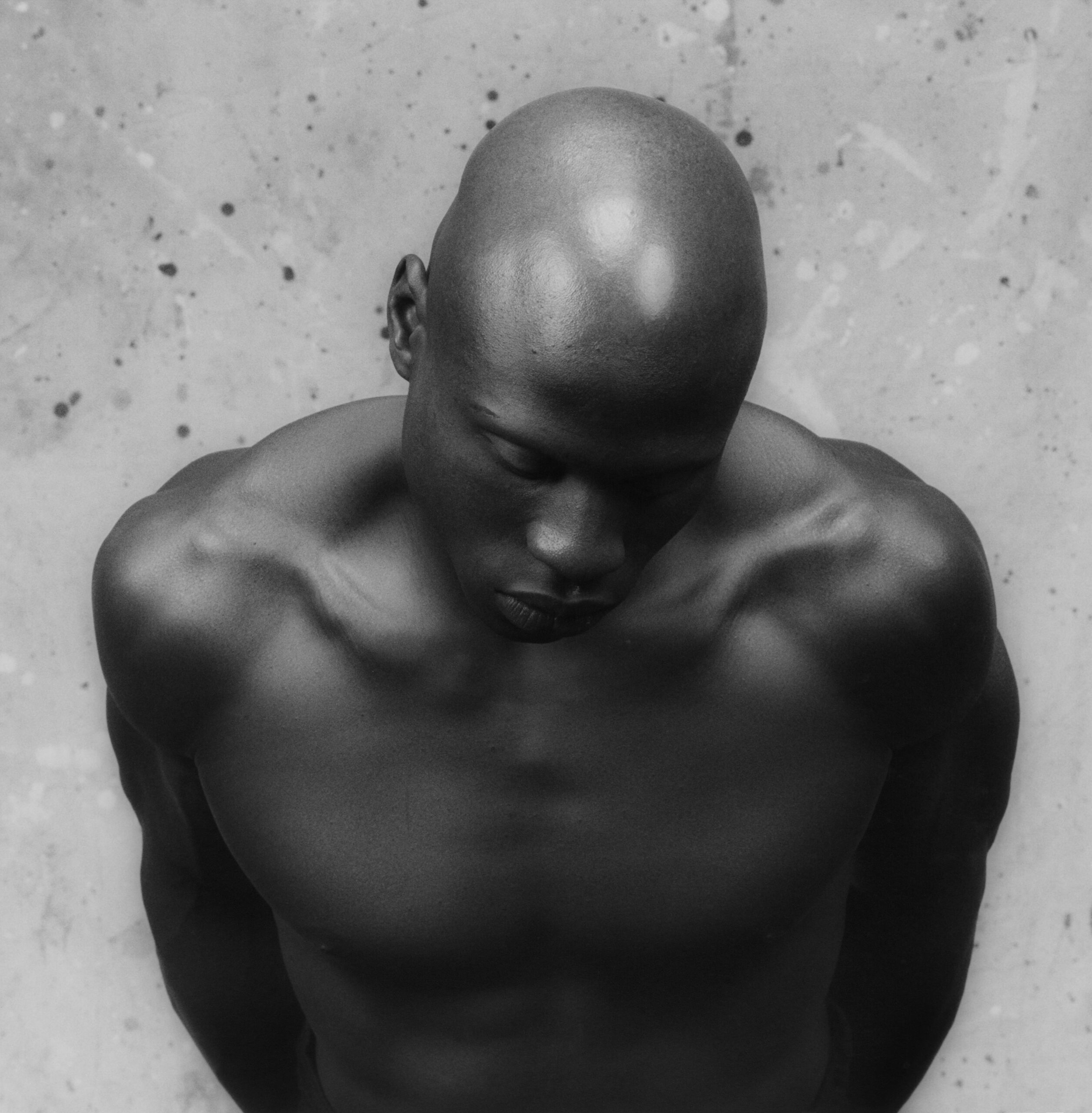
What this architecture tends to obscure is that Mapplethorpe’s photographs of Black male bodies are not merely a section within the exhibition. They are a question running through the entirety of the work, demanding a form of attention different from the one encouraged by the wall texts.
The retrospective is the second act of a trilogy that began at Le Stanze della Fotografia and will continue at Museo dell’Ara Pacis from May 29, 2026. The Milan exhibition explicitly foregrounds formal research: the nude as idealized form, the body as classical mimesis, what the catalogue describes as an “Olympian Greek mimesis” in which musculature and physical tension replace timeless beauty. This reading is not incorrect. But it is partial. And partiality, when the subject is the Black body photographed through a white gaze, is never a neutral omission.
The Ambivalence of the Gaze
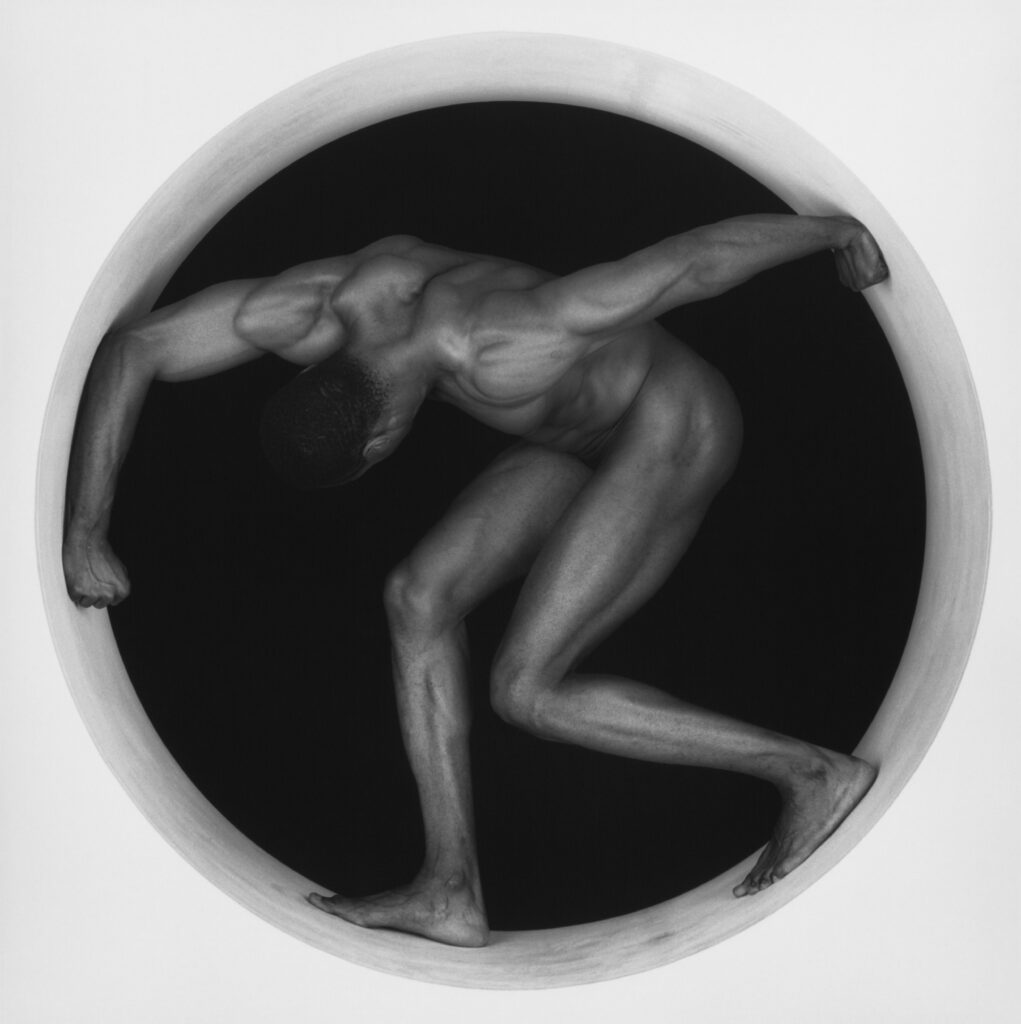
Moving through the rooms dedicated to Black male nudes, what strikes the viewer most forcefully is the solitude of the images. The photographed bodies never truly inhabit a space; they possess neither history, nor relation, nor environment. They exist within an extremely controlled visual apparatus that transforms them into pure form. Yet this very transformation, the thing that makes the photographs so powerful, is also what has fueled their critical controversy for decades.
The theorist Kobena Mercer, in his 1986 essay Reading Racial Fetishism, was the first to rigorously articulate the structural tension at work within Mapplethorpe’s Black Book. Mercer identified the effect of visual isolation, the fact that Black men appear always alone within the frame, never relational, never contextualized, as a fetishistic operation that simultaneously elevates and immobilizes. In Mercer’s reading, the gaze that “reasserts control by feminizing the Black male body into a passive, decorative objet d’art” denies its subjects the very interiority it claims to celebrate.
Man in a Polyester Suit (1980), perhaps the most discussed image within this entire debate, is a portrait without a face. The figure is cropped at the neck and thighs. What remains, in the foreground, is the penis protruding from the fly of the suit. The image operates simultaneously on multiple registers: it is a formal study in contrast (dark skin, light fabric), an eroticization, and inevitably a visual citation of the mythologized Black phallus that Western culture has both feared and fetishized since at least the colonial era. That Mapplethorpe frames all this within the language of high art photography does not neutralize its iconographic weight; it crystallizes it.
It is worth recalling that Mercer later returned to his own interpretation in Looking for Trouble (1991), softening the accusation and acknowledging the ambivalence of the images, the possibility that they could also be read as a celebration, however compromised, of Black beauty. This revision was itself contested, particularly by the critic Sikhumbuzo Mngadi, who argued that Mercer’s reconsideration was too generous, and that the colonial visual archive from which Mapplethorpe draws cannot be neutralized by aesthetic intention, however sincere.
The Question of the Eye
There is a biographical fact that matters, and that the institutional framing of the exhibition tends to treat as context rather than content: Mapplethorpe was a white gay man photographing Black men he desired in the New York of the 1970s and 1980s, from a position of considerable cultural capital. This is not a disqualification. But it is a coordinate system that shapes everything within the frame.
Writing about the power of the gaze in Black life, bell hooks argued that the camera had become within Black experience “a political instrument, a way to resist false representation while simultaneously a means through which alternative images could be produced.” The implication is clear: the image is never neutral. Who holds the camera, nd from where, determines not only what can be seen, but what it is possible to see.
Mapplethorpe’s eye had been formed within the tradition of Western art history: in Praxiteles, in Caravaggio, in the surfaces of Andy Warhol’s Factory. When he turned that eye toward Black bodies, he carried with him an entire iconographic genealogy, one in which the Black body had appeared primarily as object, spectacle, or absence. His formal precision, the very quality most enthusiastically celebrated by the Milan retrospective, does not suspend this genealogy.
This is the paradox at the center of the work, and it is a paradox that the exhibition at Palazzo Reale frames as celebration without fully confronting its cost. The photographs are undeniably impeccable in composition, extraordinarily rich in tonal range, formally masterful, and simultaneously images in which the subjects are, as Mercer wrote, “silenced as fully realized subjects, and in a sense sacrificed upon the altar of an aesthetic ideal.”
The Queer Dimension and Why It Matters
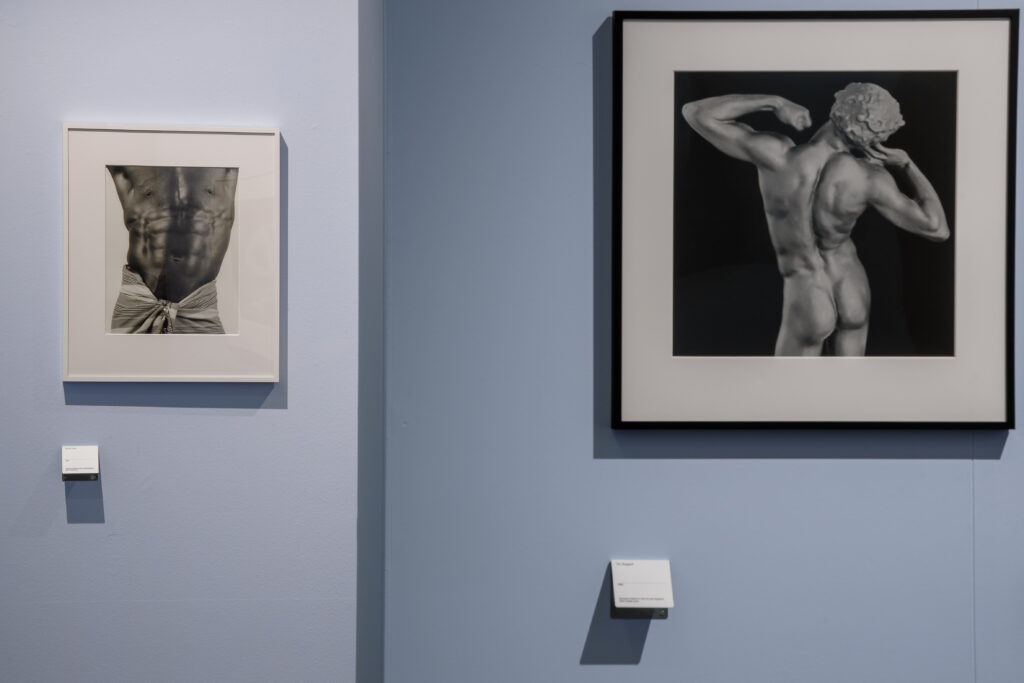
It would be a mistake to read Mapplethorpe’s work solely through the lens of race, treating the queer dimension as secondary. The two axes are inseparable, and their intersection is where the work’s most compelling, and most uncomfortable, tensions reside.
Mapplethorpe photographed from within a specific moment in the history of queer culture: post-Stonewall New York, the radical sexual culture of the 1970s, the S&M scene of the West Village, the world before AIDS changed everything. His X Portfolio, the bondage and sadomasochistic images that ignited the American culture wars of the late 1980s, is inseparable from the Black male nudes. Both series are images of a desire refusing domestication, insisting upon its own visibility within a culture that demanded its invisibility.
And yet there is a difference. The men in the S&M photographs are agents within their own degradation, participants in a ritual that, however transgressive, remains reciprocal. The Black men in Black Book are, for the most part, aestheticized objects. Their desire is not represented. Their interiority is not invited. The gaze moves in only one direction.
This asymmetry is not accidental; it is structural, and it reveals the limit of Mapplethorpe’s radicalism: a radicalism capable of imagining the liberation of queer sexuality while simultaneously reproducing, with exquisite craftsmanship, the visual logic of racial domination.
What the Frame Does Not Show
The question that remains after moving through the rooms of Palazzo Reale is not whether Mapplethorpe was a great photographer, he was. His formal mastery is present in every print, in the silver-gelatin depth of the images, in the sculptural intelligence of the light. The question is what we are doing with that greatness when we place it within an institutional frame that celebrates it without interrogating it.
There are other artists whose work might illuminate what Mapplethorpe’s leaves in shadow. Lyle Ashton Harris, who staged Black queer bodies with full awareness of their representational history. Paul Mpagi Sepuya, whose work on the studio, the camera, the archive, and the Black male nude rewrites the Mapplethorpe tradition from within. Glenn Ligon, who in 1993 produced Notes on the Margin of the Black Book, placing one photograph from Black Book per page surrounded by thirty-two found quotations, from academics, critics, friends, and strangers, all responding to the image, transforming a closed aesthetic object into an open critical conversation.
Why, then, are these artists absent? Their absence is not neutral. An exhibition titled Forms of Desire that presents Mapplethorpe’s formal genius without naming the structures of power through which desire circulates is an exhibition that has made a choice: to admire the eye without asking what that eye was doing. The forms of desire are never merely formal. They are historical, political, embodied, and some of the bodies that shaped them are still waiting for the frame to turn toward them.
Translation by Luigina D’Introno
Robert Mapplethorpe. Le forme del desiderio
Curated by Denis Curti
Palazzo Reale Milano
Produced by Palazzo Reale and Marsilio Arte in collaboration with the Robert Mapplethorpe Foundation, New York
Robert Mapplethorpe. Le forme della bellezza
Curated by Denis Curti
29/05/2026 – 04/10/2026
Museo dell’Ara Pacis Roma
Robert Mapplethorpe (Queens, New York, 1946 – Boston, 1989) was one of the most influential and controversial photographers of the twentieth century. Educated at the Pratt Institute in Brooklyn, where he studied painting, collage, and sculpture, he turned to photography in the early 1970s through the Polaroid medium, rapidly developing a distinctive style marked by compositional rigor, controlled lighting, and an almost sculptural attention to the body. His work ranges from portraits of artists and celebrities to flowers, celebrated male nudes, and images of New York’s queer and BDSM scenes. His oeuvre fundamentally redefined the relationship between photography, desire, and representation, becoming central to cultural debates surrounding censorship, sexuality, and identity.
Denis Curti is a curator, essayist, and photography critic regarded as one of the leading voices in contemporary Italian photography. Artistic director of Le Stanze della Fotografia in Venice, he has curated numerous exhibitions devoted to major international photographers, with a particular focus on the relationship between image, archive, and narrative construction. Throughout his career, he has directed institutions and festivals dedicated to photographic culture, distinguishing himself through a curatorial approach that combines historical research, public accessibility, and close attention to exhibition design.
N. May 20, 2026