By Camilla Boemio
The curator Camilla Boemio speaks to the inaugural winner of Myma Art Prize Lagos-based batik artist Omolola Coker. The Myma Art Prize, is a new initiative established in honor of Dr. Myma Belo-Osagie, the renowned Nigerian lawyer, philanthropist, and collector, to support emerging artists from Nigeria and Ghana.
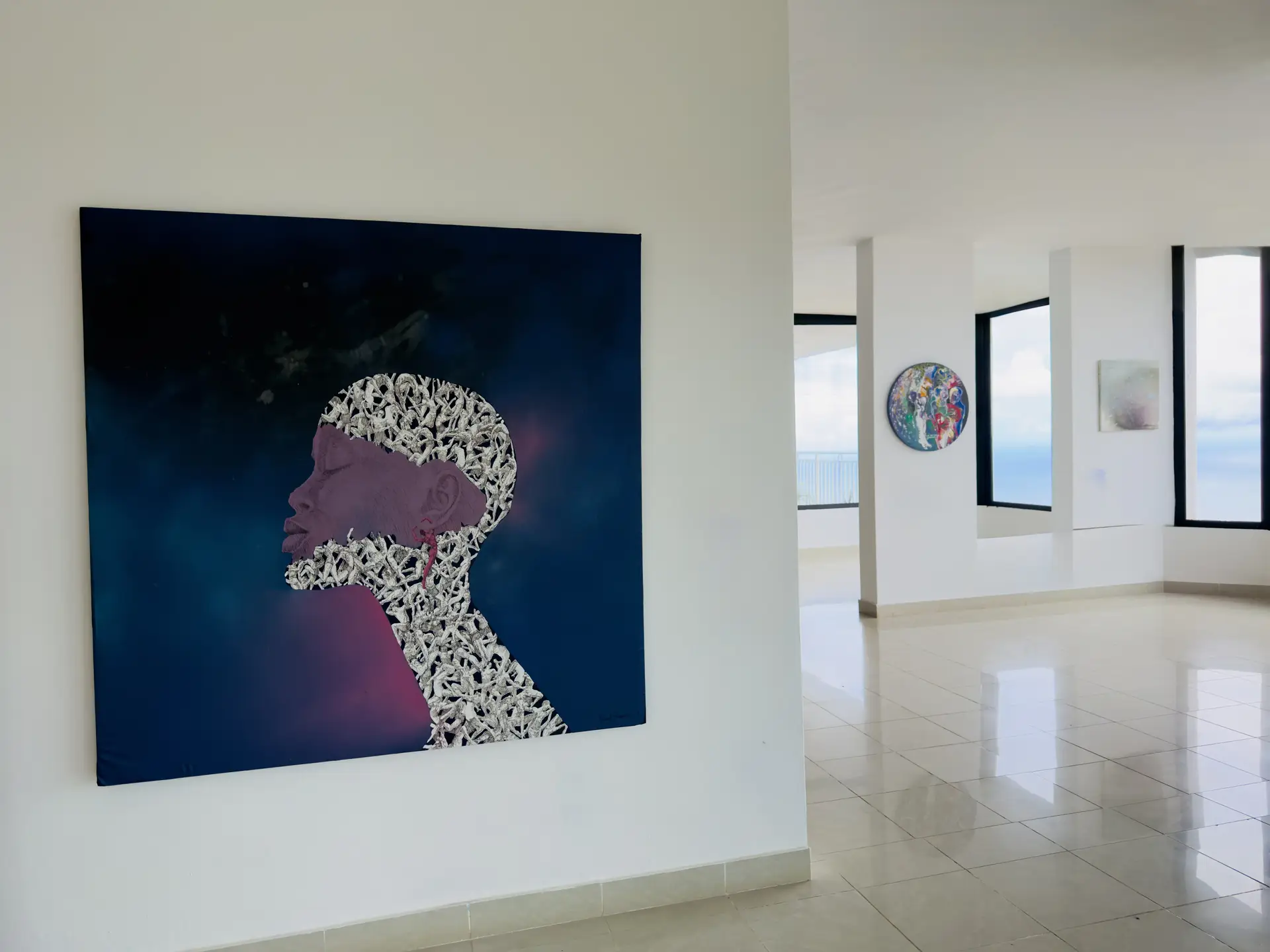
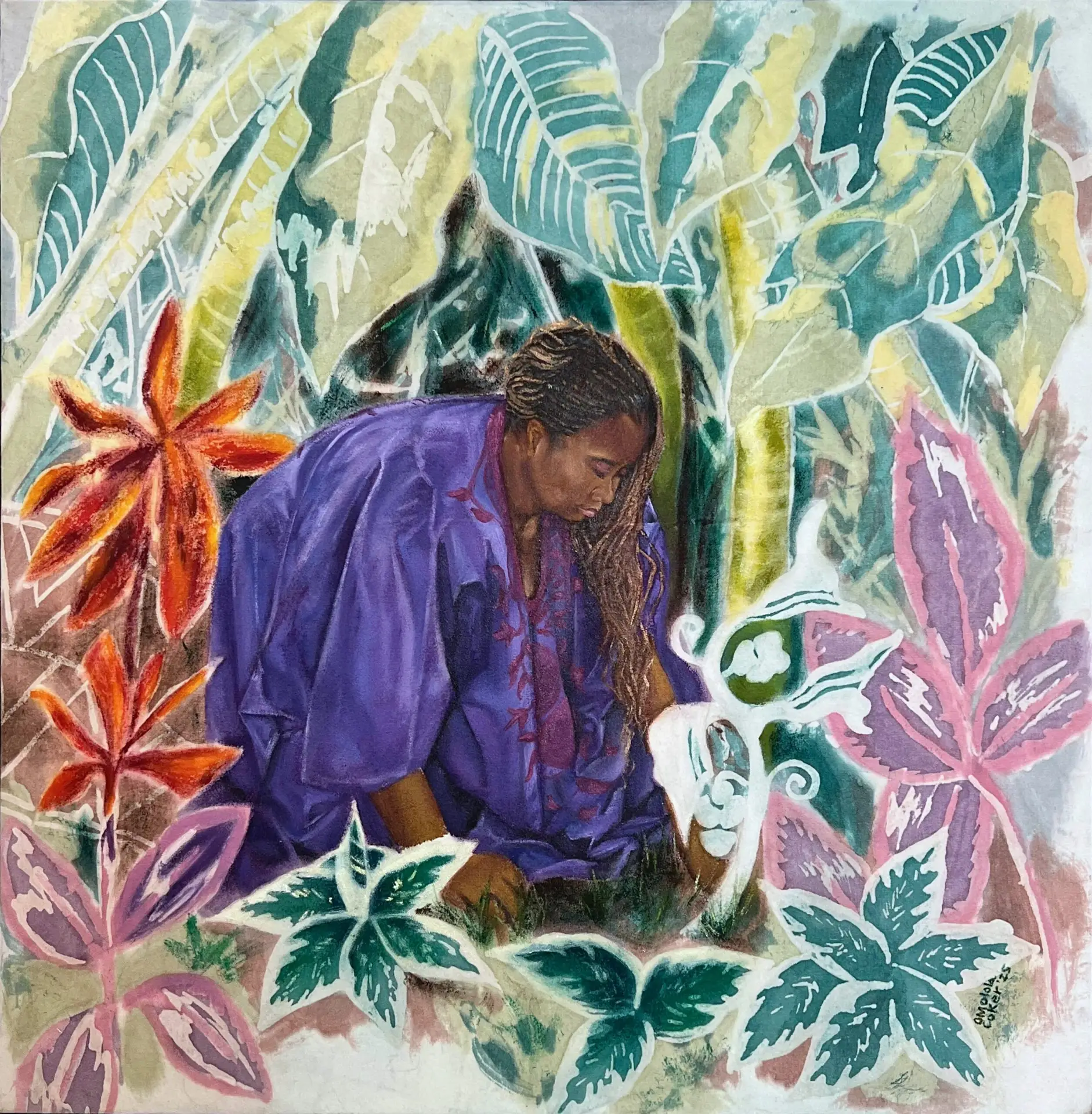
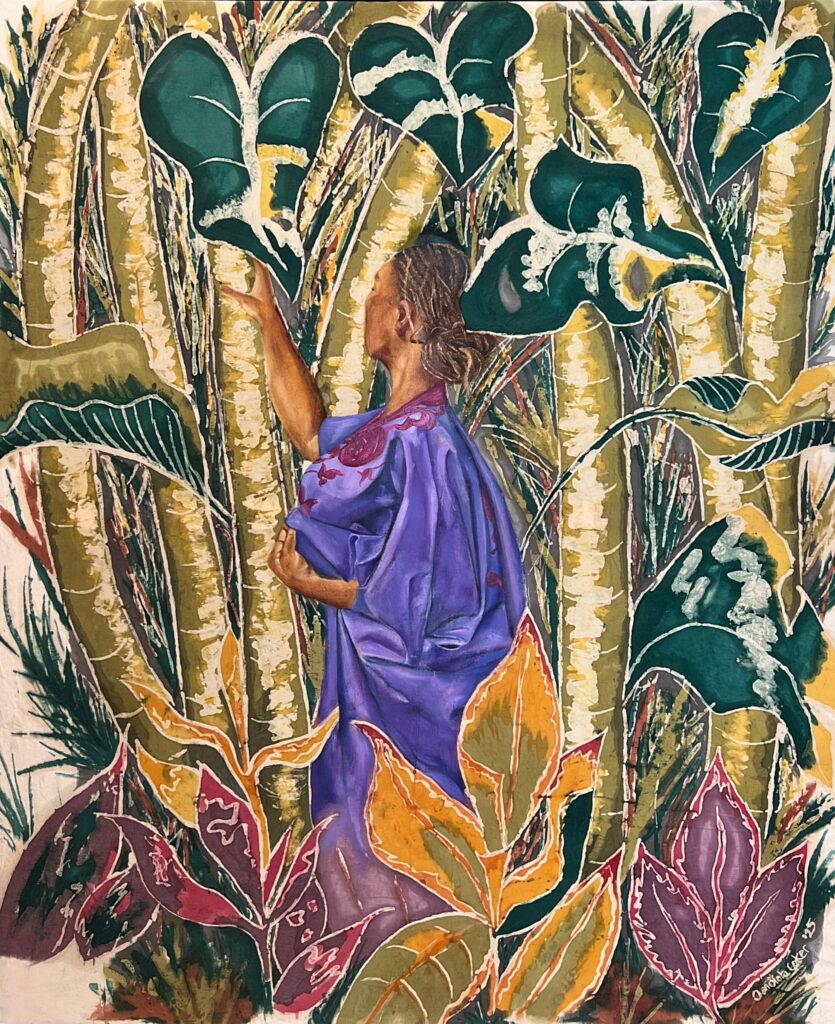
The practice of Omolola Coker reflects her personal experiences, forming an intimate dialogue between the physical and the spiritual through themes of home, rest, heritage, and relationships. Through vibrant expressions of identity, she explores the return to one’s essence and examines how identity is constructed and balanced in relation to global exposure and cultural inheritance.
How did you first get into painting?
As a child, I was always creative – painting, cross-stitching, knitting, designing, and making things with my hands. While I was at school in the UK, I studied Art and Art History (A-levels), with the hope of attending the University of Arts London Central Saint Martins to study fashion. However, as is often the case with many Nigerian parents, they didn’t consider it as a practical path.
Instead, I chose a degree that felt more acceptable which was Business Management and Japanese – a small act of rebellion that allowed me to keep a connection to design and gain some distance from my parent’s expectations. When I look back, I think once you begin compromising on your dreams, it’s easy to stay on that path, which was certainly true for me. I pursued corporate opportunities, eventually building a career in research, without really considering another direction.
Then COVID-19 happened. During the pandemic, I was furloughed for about three to four months. Living alone, with no work to occupy me, I naturally found myself sketching and painting on printer paper before eventually buying proper paints and a sketchbook. That was the beginning of my journey as an artist.
It wasn’t an immediate moment of clarity where I suddenly decided this would become my career. Rather, art gradually became impossible to ignore. My past-time paintings steadily evolved into a full-time career where I’ve had the privilege of exhibiting internationally, including as part of the Nigeria Focus exhibition at the RMB Latitudes Art Fair in South Africa, and of seeing my work become part of broader conversations around heritage and contemporary African womanhood. It’s been incredibly affirming to realize that the creative path I thought I’d left behind was waiting for me all along.
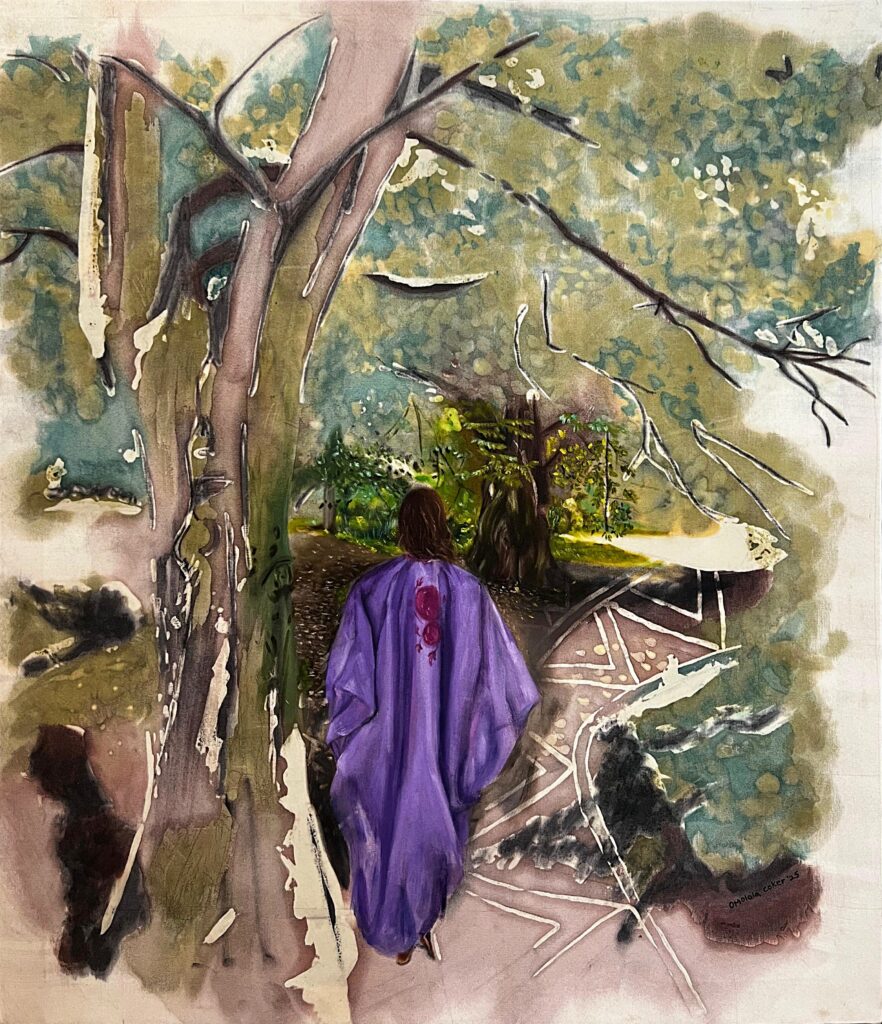
Can you introduce us in your artistic research forming an intimate dialogue between the physical and the spiritual through themes of home, rest, heritage, and relationships?
Journalling is probably my first form of research. I write a lot (about my faith and any struggle of a particular moment), but those entries don’t usually translate directly into a painting. More often, they are thoughts, questions, or experiences that I’ve been sitting with for a long time. Over time, those ideas develop lives of their own, consciously or unconsciously finding their way into my work. I think that’s one of the main ways I emotionally and spiritually imbue my paintings with themes of home, rest, heritage, and relationships.
Because I studied Art History – albeit largely from a Western perspective – I make a conscious effort to research the deeper historical and cultural contexts behind the elements I use. That includes Adire symbols and motifs, the significance of indigo, white clothing, as well as different batik (wax-resist dye) traditions from around the world.
This research informs my decisions about composition, symbolism, and what I want to emphasize within a piece. By the end of the process, everything comes together: aspects of my own story, fragments of memory and emotion, intentional focal points, and quieter layers of symbolism that viewers can uncover over time.
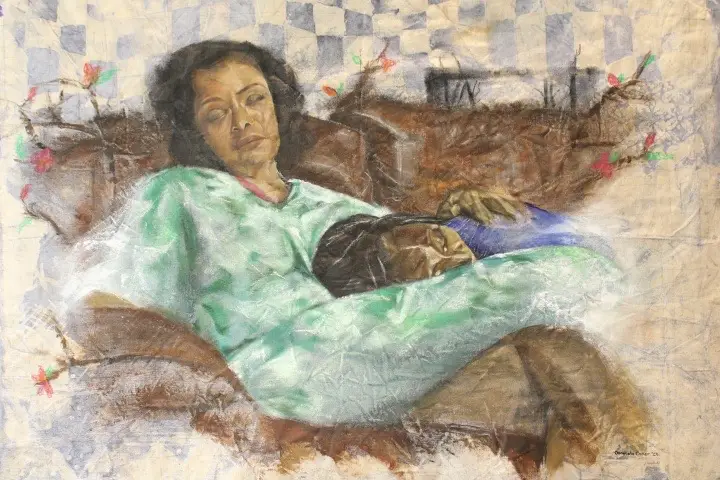
How does imagination influence the content of your work?
A lot of my ideas begin with journaling. The more I write, the more my imagination tends to wander, and before I know it, I’m sketching rough scenes that appear almost unexpectedly. Those moments often become the emotional or spiritual influences of a painting.
It’s not necessarily that if I’m feeling sad, the resulting image is sad. Instead, the sketches often take on their own whimsical or surreal quality, creating narratives that evolve naturally from whatever prompted the journal entry.
Other inspiration come from everyday life. Sometimes it’s a candid photograph I’ve taken of friends or family that perfectly captures a feeling of intimacy or connection. Other times it’s a solitary tree during a walk, for example – that inspires another interpretation of my women in white, frolicking among treetops. I’m always collecting small moments that carry an emotional resonance, even if I don’t realize it at the time.
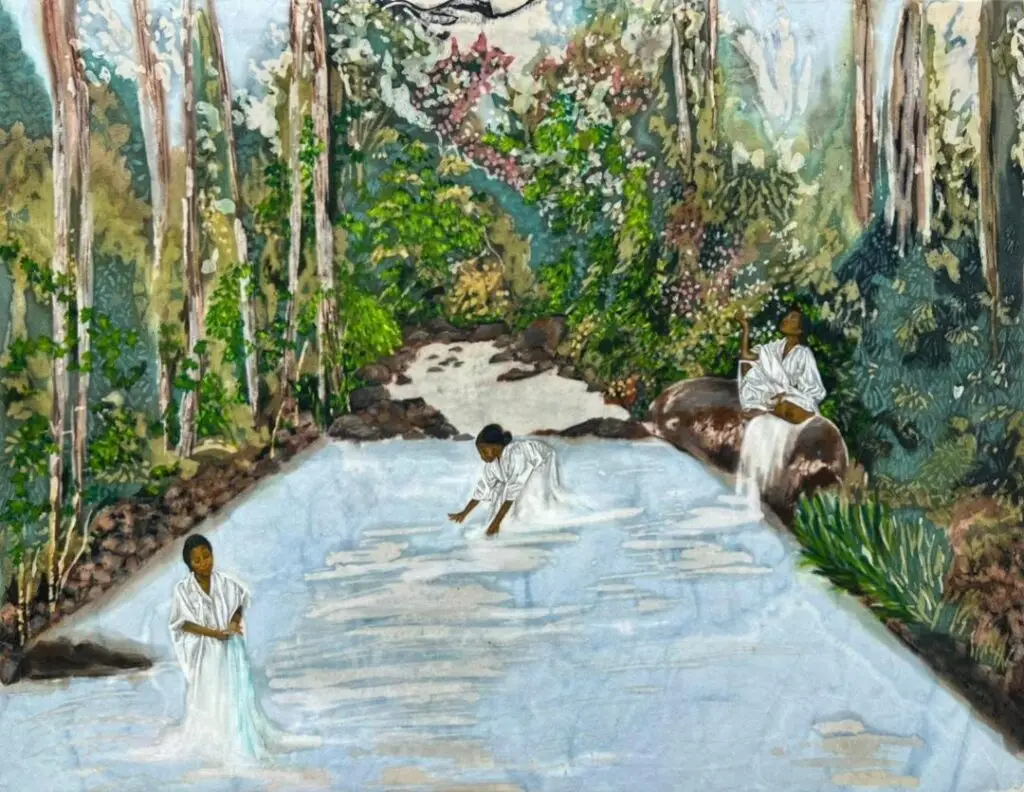
How do you feel about being a woman painter?
It’s not something I’ve consciously analyzed in great depth, but being a woman undoubtedly shapes the way I think about my practice.
In Nigeria, there are still underlying expectations and concerns about how marriage, motherhood, and other life transitions might affect a woman’s career – I’ve been hearing it a lot more often as I grow in the art space. I’m sure those experiences will indeed influence my work in some way, but I’m equally certain that I don’t want them to derail it. My practice will simply evolve, as it should, alongside my life.
That awareness has also made me think more intentionally about how I represent women in my paintings. While my earlier works often centred on rest and quiet contemplation, I’m increasingly interested in portraying women as active, decisive, and self-assured.
To me, women are not only figures of beauty or peace. They are builders of community, creators, nurturers, protectors, and people who continually reshape both themselves and the environments around them. I hope my paintings reflect that complexity.
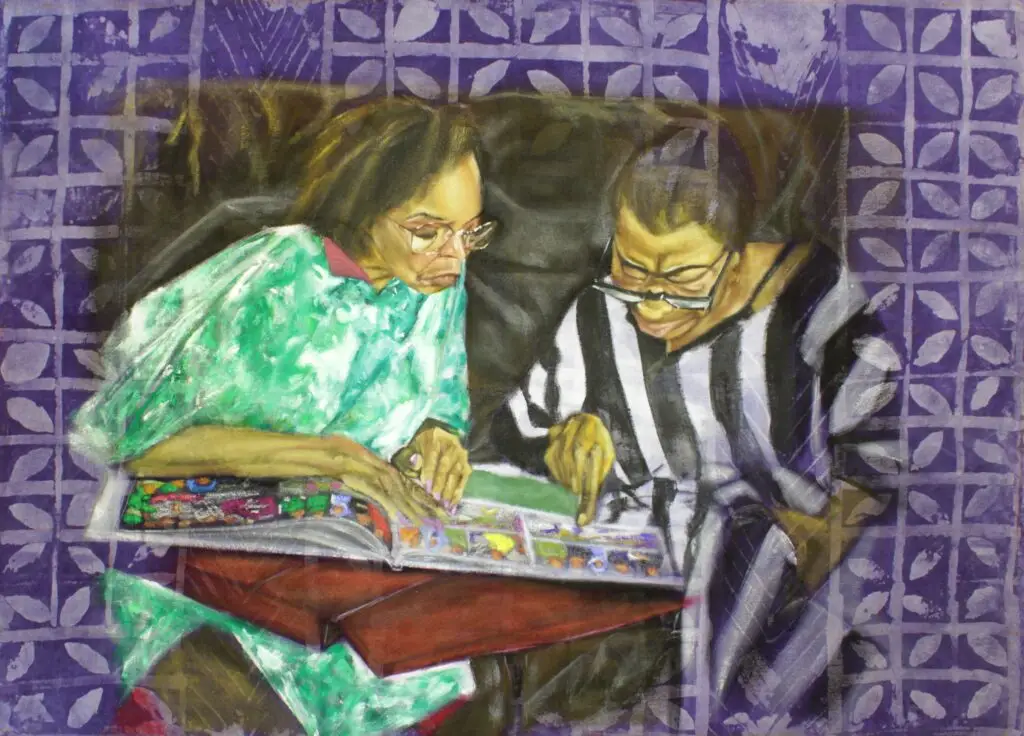
Omolola Coker (b. 1992) a Lagos, Nigeria–based figurative and batik artist. Omolola is the winner of the inaugural MYMA Art Prize, and her work has been featured in group exhibitions such as Garden Tales (2022) in London, and, since returning to Lagos, Nigeria, Moments in Monochrome (2023), Home: Origins of All Poems (2024), Adegbola Projects: End of Year Party (2024), The Best of Ife (2025), as well as her solo exhibition In Bloom (2025), What Is Given (2026).
N. July 4, 2026