By Alessia D’Introno
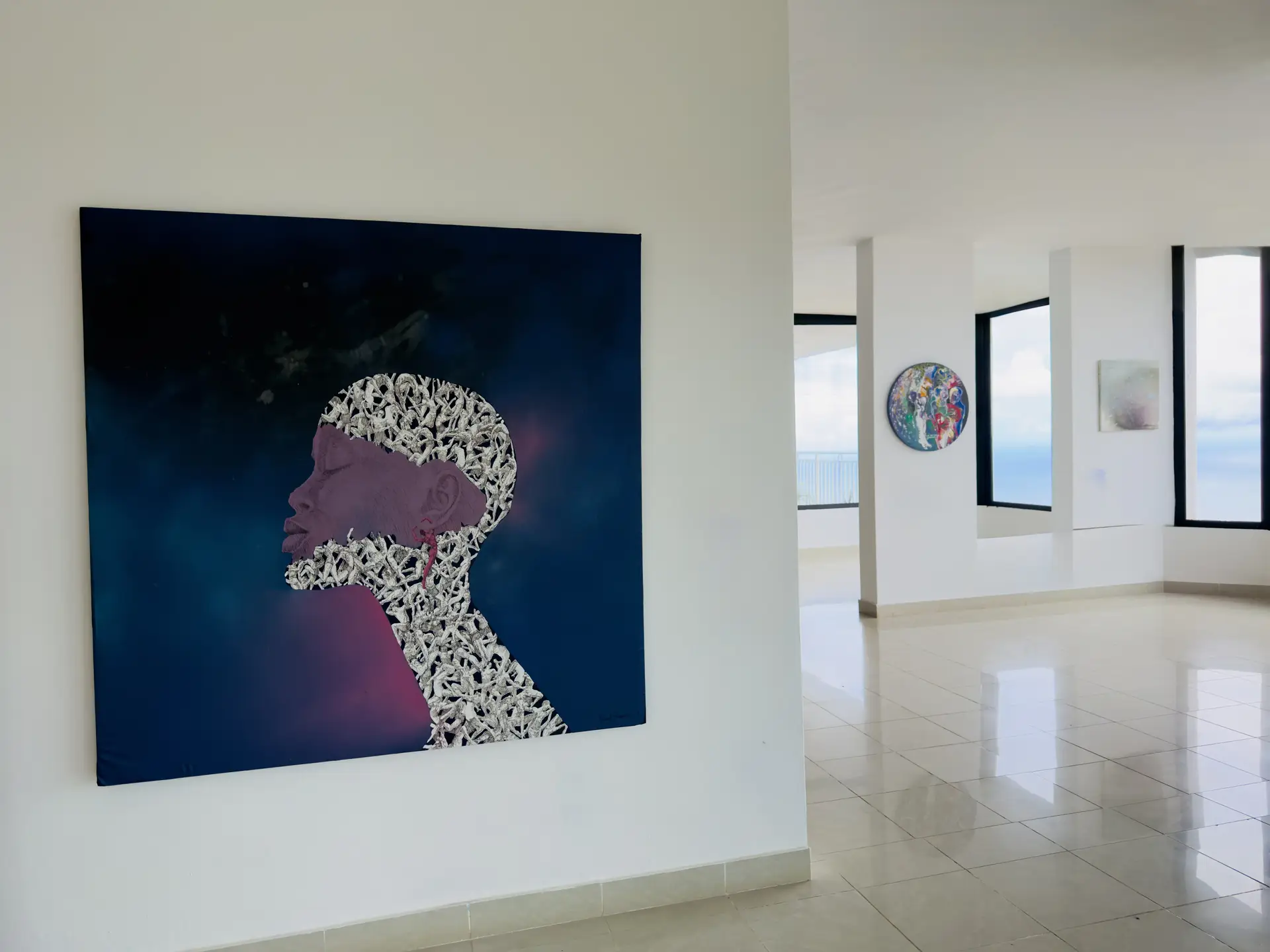
Art has always been one of the forms through which the stories, knowledge, and identities of people travel, are preserved, and transform over time. It is among the instruments and narrative languages that have allowed for the creation of a connection between the past and the present. Passage – Art and Heritage from West Africa is one of those exhibitions that challenges a static idea of art and heritage, relating instead to the passages between different temporalities and the way ancestral memories continue to live and be reinterpreted in the contemporary era.
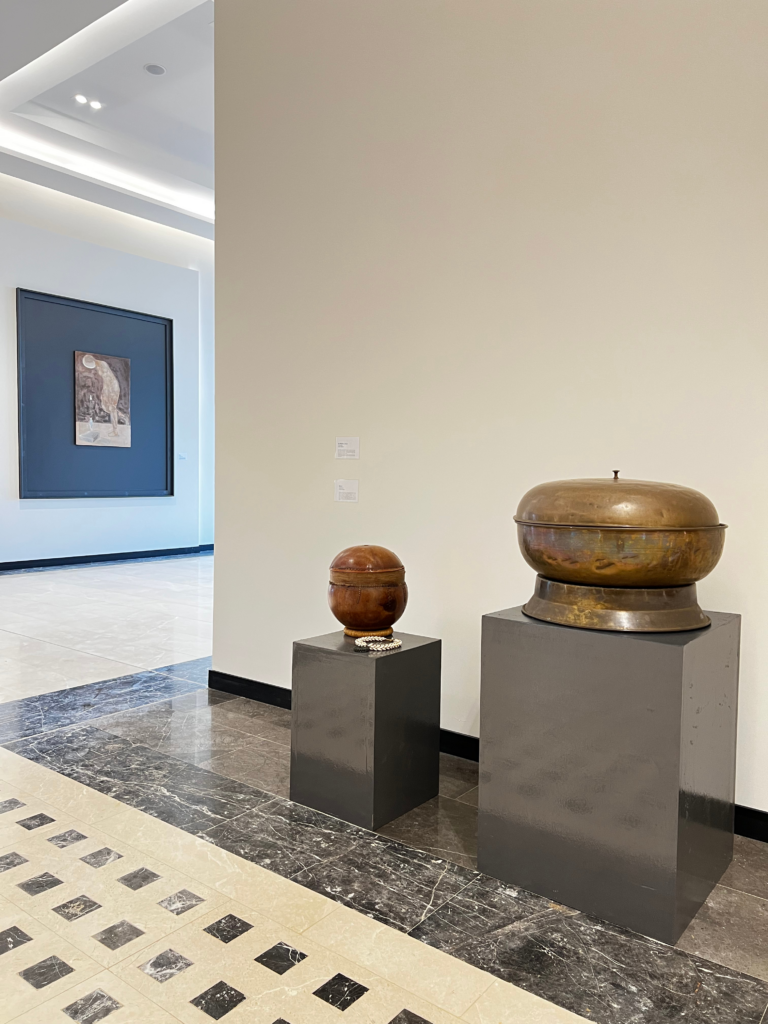
In the exhibition in Freetown, Sierra Leone, objects belonging to the traditions of West African cultures dialogue with the works of contemporary artists. Among these objects, from Niger, is the Hausa Trunk Kumbo. This is a brass container traditionally used for transporting gifts destined for the bride. The number of pieces owned reflected the family’s wealth. From the Senufo communities, whose cultural area extends across Burkina Faso, Mali, and Ivory Coast, comes a typical dried Calabash used in daily life, and particularly in ceremonies and music, as a sounding board for the ncegele, or balafon.
Originating from 15 different West African nations, contemporary artists Ludovic K. Fadaïro, Nuno M. Martins, Pascal Konan, Njogu Saït Touray, Enoch Nii Amon Hammond, Bella Bah, Lemos Djata, Collins Courage Wiah, Timi Kakandar, Soly Cissé, Arthur Timothy, Hafsatu Serry, Thierry Tomety tell, through unique perspectives and tools, the story of their ancestries, as well as their transformations, human and spiritual relationships, and the beliefs that continue to animate the present.
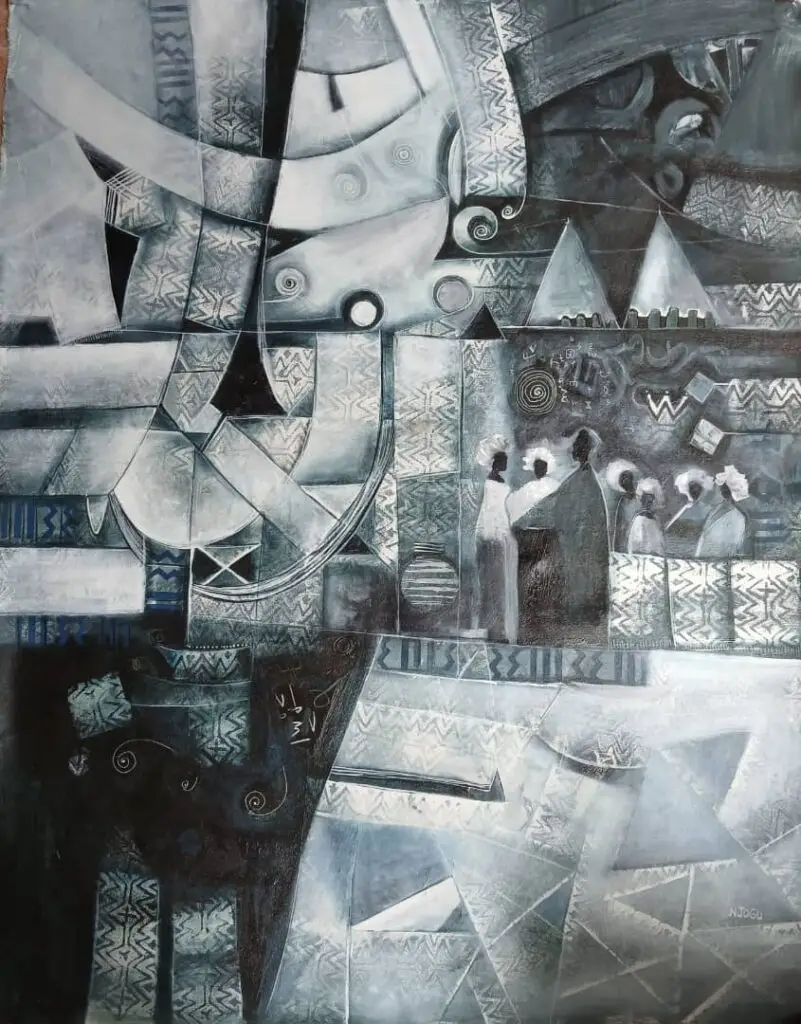
In the work Intertwined by Njogu Saït Touray, from the Gambia, invisible bonds unite people, places, and generations over time. Inspired by the Paincha (Bantaba) of Senegambia, a space for dialogue and community life, the threads evoke a shared memory that travels, leaving traces in time destined to last.
In this crossing between past and present, the exhibition curated by Sarah Hachi-Duchêne, presented for the first time on the occasion of the ECOWAS Summit 2026 in Lungi and now at unx-art Gallery in Freetown, opens a broader space for reflection in which traditions continue to be reactivated through the eyes and practices of the artists.
Conversation in Motion by Ghanaian artist Enoch Nii Amon Hammond, depicts a man and a woman immersed in an intimate conversation. A simple and familiar gesture of mutual care that speaks of daily relationships and those silent bonds that shape the community life experienced by the artist. Through his Afrohornism technique, which uses animal horns, Hammond blurs the line between painting and sculpture, giving the material an almost corporeal presence.
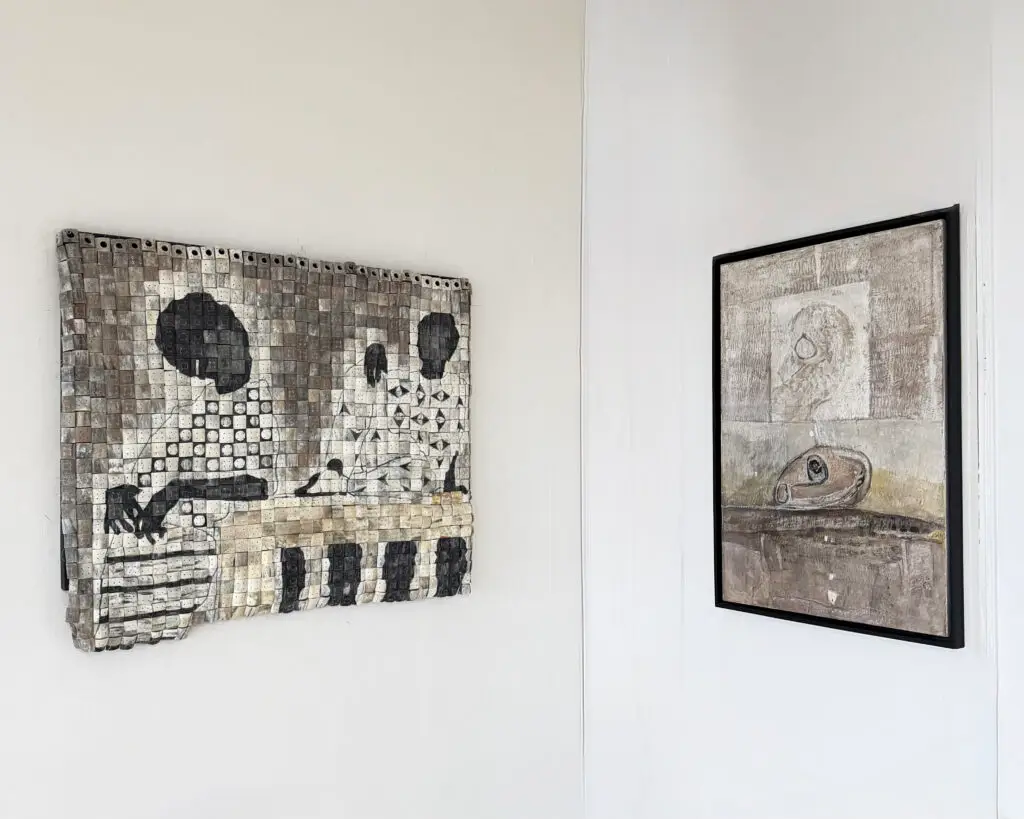
It is precisely in the passage between what was, what is handed down, and what continues to transform, that Passage finds its strength: thinking of heritage as something that continues to live through those who interpret it and those who reactivate it in daily life.
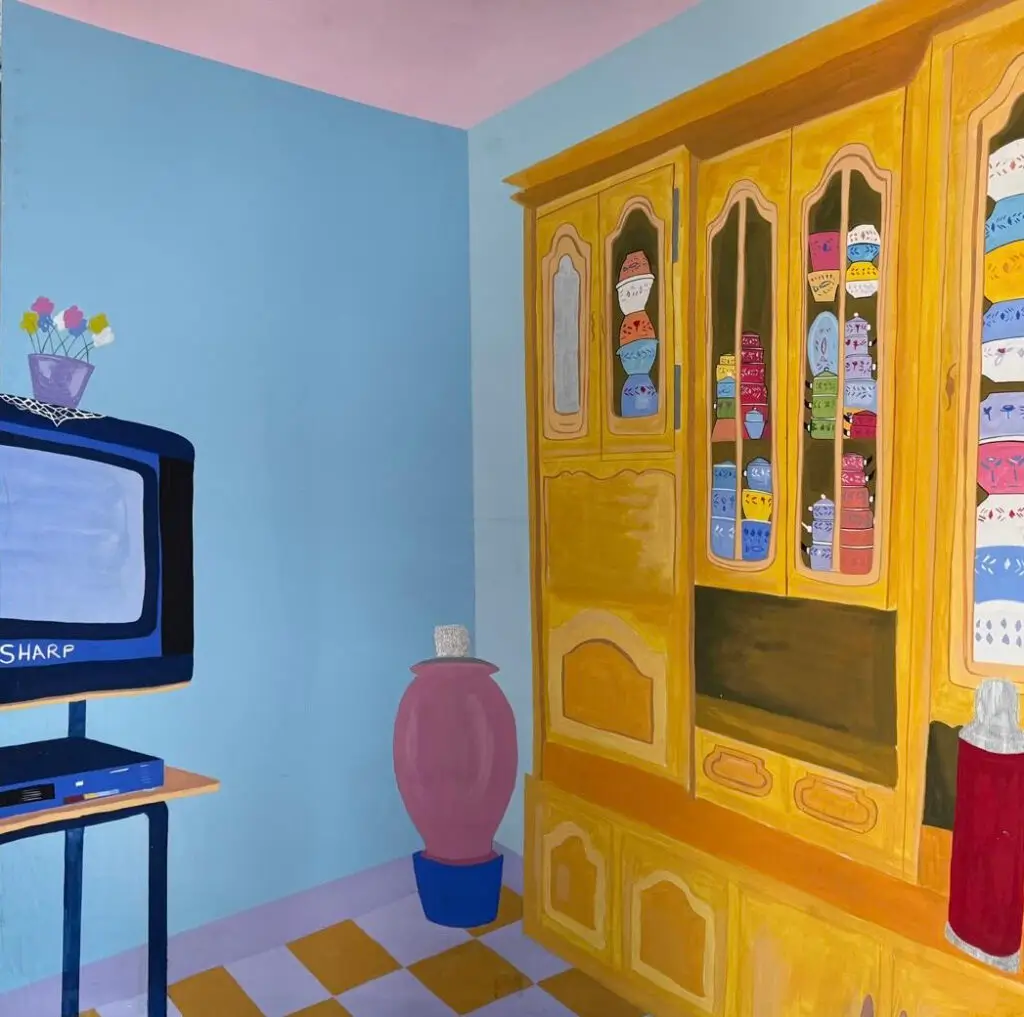
In West Africa, art is an integral part of everyday life and, like oral tradition, is a form of transmitting history. Through objects, images, and artistic practices, it guards and hands down knowledge and identities, accompanying social, spiritual, and political moments and marking the most important passages of existence like a kind of living archive.
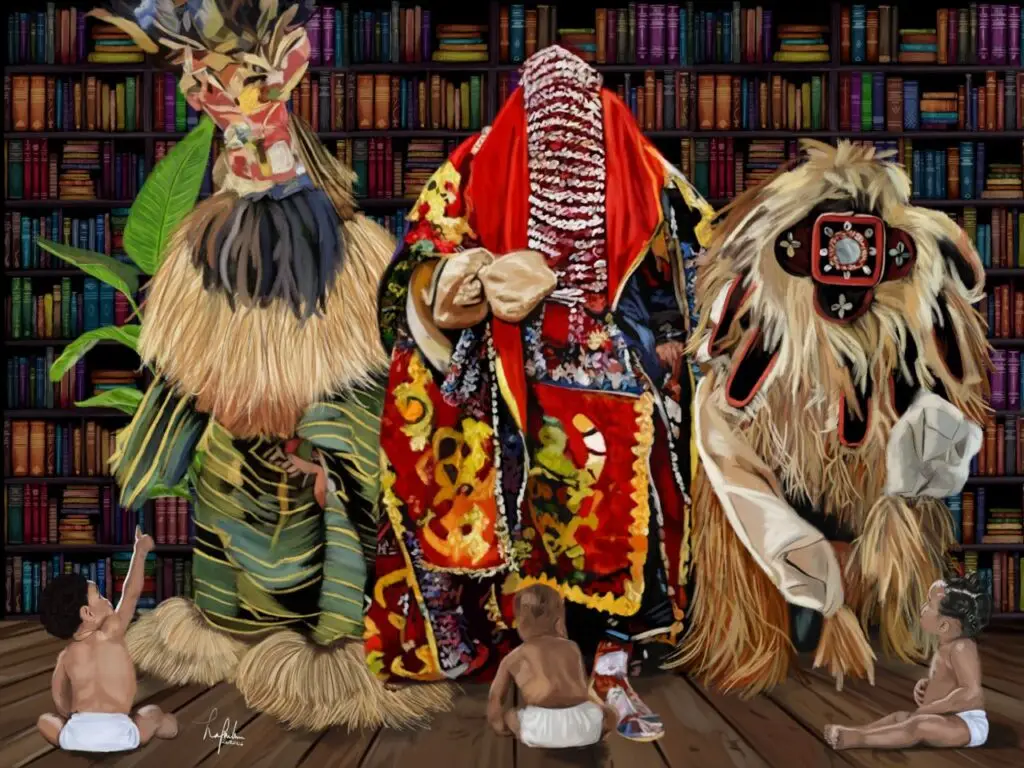
In Guardians of Memory by Sierra Leonean artist Hafsatu Serry, the ceremonial masks of Sierra Leone, guardians of ancestral oral memory, enter a library, fusing tradition with another form of preserving knowledge: the written word. Their coexistence suggests how identity and belonging can continue to renew themselves through future generations.
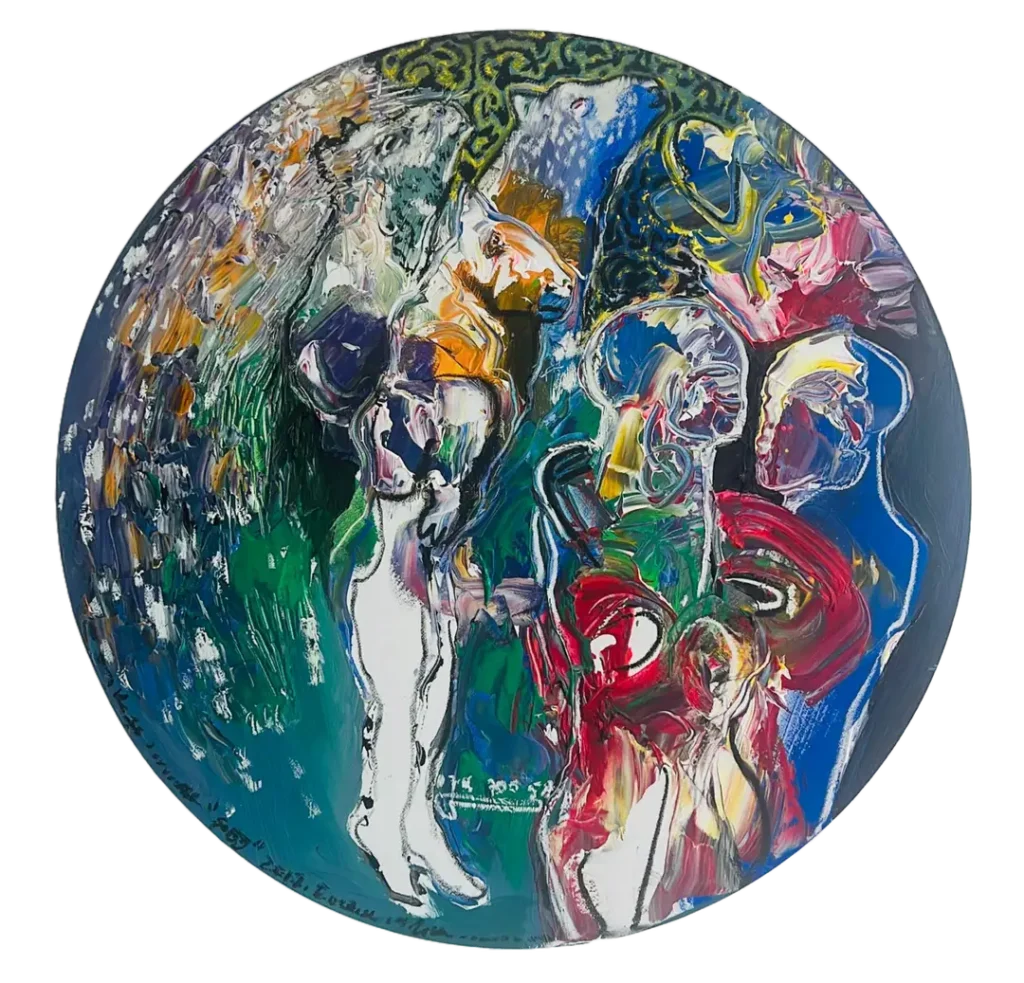
A reflection also found in Nos amis by Soly Cissé from Senegal, where hybrid figures, halfway between human and animal, connect ancestral memory and contemporary society. The recurring barcode motif recalls an increasingly standardized world, while the figures affirm the complexity and vitality of the persisting human condition.The artists’ works, through different languages, show heritage as a living and constantly moving material. This is the passage of the exhibition: the passing of stories, languages, and knowledge from one generation to the next, from the past to the present, where art continues to transform and document.
Passage – Art and Heritage from West Africa
Curated by Sarah Hachi-Duchêne
1–11 October 2026
unx-art Gallery
Leicester Peak, Freetown, Sierra Leone
unx-art is a curatorial and editorial lab based in Freetown, Sierra Leone. Through exhibitions, publications and long-term research, it explores how contemporary African artistic practices engage with history, heritage and the cultural continuities that continue to shape West Africa.

Alessia D’Introno is Editor-in-Chief of the African contemporary art magazine Equator Echoes, registered in the Special List of the Lombardy Journalists’ Association. She holds a Master’s degree in Visual Arts and Curatorial Studies from NABA, Milan, and has completed a postgraduate course in Demoethnoanthropological Heritage at the University of Milano-Bicocca. She has published articles in Juliet Art Magazine and ArtsLife. Her critical and curatorial research focuses on the deconstruction of classical art history and the decolonization of the contemporary European art system.
Translation by Luigina D’Introno
N. October 2, 2026